From static piers to modular water platforms
Step off a launch at a high end island retreat and you may not realise you are already standing on the core technology of an HDPE floating platform sustainable resort. Beneath your feet, a grid of high buoyancy cubes quietly replaces the heavy fixed pier and signals a shift in how luxury properties now build on water. That shift matters for any guest who cares about design, sustainability and the feel of every floating dock underfoot.
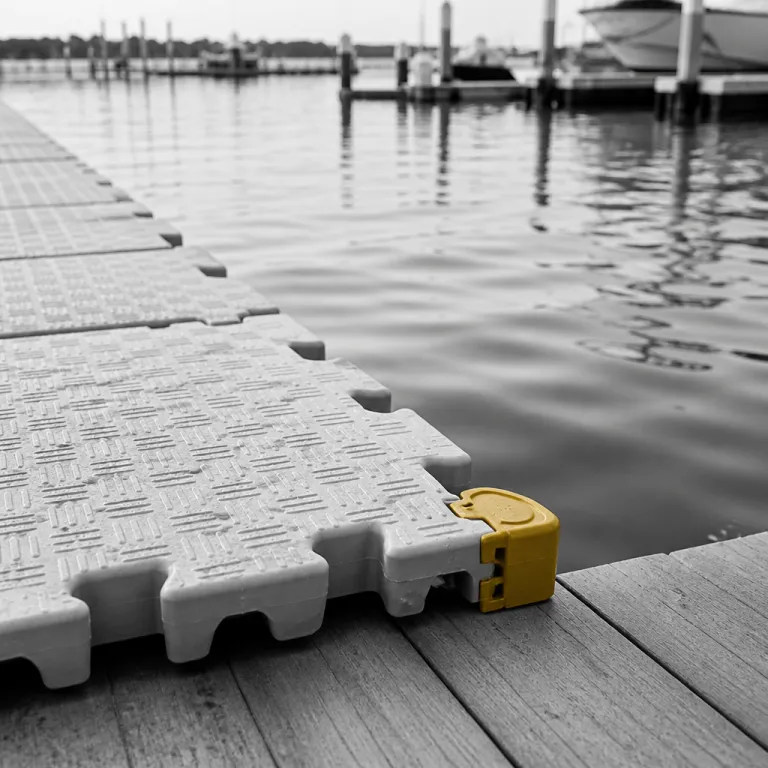
High Density Polyethylene, or HDPE, is a marine grade material engineered to float, flex and endure harsh weather without corroding. In resort settings, HDPE floating structures are assembled as modular floating systems, locking together like oversized building blocks to create walkways, yoga decks, floating pools and arrival pontoons that sit lightly on the water. This modular design allows resorts to reconfigure docks floating around a lagoon or bay as guest needs, seasons and weather conditions change.
Traditional wooden docks rely on piles driven into the seabed, which can damage sensitive marine habitats and demand constant maintenance. By contrast, HDPE docks rest on the surface, anchored but not fixed, so the environmental impact on the seabed is far lower and long term reversibility is built in. For a business leisure traveller balancing carbon conscience with comfort, that combination of eco friendly engineering, low maintenance operation and high safety standards is becoming a decisive factor when choosing a water based stay.
Engineering the HDPE floating platform sustainable resort
At the heart of an HDPE floating platform sustainable resort is a set of interlocking pontoons that behave more like a flexible carpet than a rigid pier. Each floating pontoon module is moulded from HDPE, sealed against water ingress and designed to support substantial loads in typical hospitality use. When these modules are connected into larger floating docks, the result is a stable surface that still moves gently with the water rather than fighting it.
Specialist manufacturers of modular floating systems configure HDPE docks to suit different waterfront geometries and guest flows. Their pontoons can be arranged as straight marina walkways, T shaped arrival docks, circular platforms for open air dining or even serpentine paths that lead to private boat hotels moored offshore. Because the material is UV resistant and designed for long term marine use, the platforms maintain their structural integrity and visual appeal even under intense sun, salt and shifting weather conditions.
For resort developers, the engineering advantage lies in speed and reversibility rather than in brute permanence. A floating dock for a new overwater bar can be installed in weeks, then extended or relocated as guest demand evolves, which contrasts sharply with the fixed commitment of traditional wooden piers. This adaptability aligns with the broader movement toward climate responsive floating architecture, explored in depth in analyses of why floating structures are more than a hotel gimmick, and it gives waterfront properties a powerful tool to future proof their shorelines.
Sustainability, materials and the quiet eco calculus
For a guest, the first impression of an HDPE floating platform sustainable resort is often visual, and the question is simple; does it look natural against the water. Designers now soften the industrial character of HDPE floating structures by integrating treated wood inlays, warm decking tones and low profile railings that echo traditional wooden docks without importing their weaknesses. The result is a hybrid language of materials where HDPE provides the structural backbone and wood becomes a tactile finish rather than a vulnerable core.
From an environmental perspective, the advantages are more than cosmetic. HDPE is fully recyclable, resists marine growth and does not typically require chemical preservatives that can leach into the water, which reduces long term environmental impact compared with some traditional wooden systems. Because the platforms float rather than stand on piles, they minimise disturbance to seagrass beds and benthic habitats, and they can be removed or repositioned if regulations, erosion patterns or sea level projections change.
Resort operators also weigh fire risk, safety and maintenance when choosing between wooden docks and HDPE docks for guest facing areas. HDPE does not ignite as readily as dry wood, and its low maintenance profile means fewer disruptive repairs, less sanding and no regular repainting, which is particularly valuable in harsh weather zones. As electric boats and other low emission vessels become standard guest amenities, a trend covered in depth in reports on zero emission boats in hospitality, the ability to run power and charging infrastructure through modular floating platforms without compromising eco credentials becomes a quiet but crucial advantage.
Guest experience on water: stability, safety and atmosphere
For the business traveller extending a boardroom week into a long weekend, the question is not whether a dock is HDPE or wood; it is whether the floating deck feels calm underfoot at sunset. Modern HDPE floating docks are engineered with wide footprints, internal baffles and carefully calculated freeboard heights so that the sensation is closer to walking on a stable terrace than on a boat. Even when small waves pass under the floating dock, the movement is slow and predictable, which reassures guests who are new to water based stays.
Safety is built into the design language of these systems rather than bolted on as an afterthought. Non slip surfaces, rounded edges, integrated cleats and discreet lighting along the pontoon edges all contribute to a sense of quiet security as guests move between their boat hotel, a floating pool or a starlit dining platform. Because the platforms sit low on the water, boarding kayaks, tenders or electric launches becomes easier for guests in business attire who may not be used to clambering over high docks or steep gangways.
Atmosphere, though, is where an HDPE floating platform sustainable resort can truly differentiate itself. Modular floating layouts allow properties to position wooden docks and HDPE docks to frame specific views, align with sunrise yoga sessions or create sheltered pockets where the only sounds are cutlery, conversation and the soft slap of water against the hulls. In one Vietnamese bay, for example, a resort reconfigured its modular pontoons after the first monsoon season to create calmer swimming zones, a practical adjustment that guests now simply experience as unusually tranquil water. For travellers comparing options on specialist platforms such as curated guides to houseboat routes and rates, these subtle experiential details often matter more than any headline amenity list.
Global hotspots and practical booking intelligence
Across the Maldives, the Caribbean, the Mediterranean and Southeast Asia, HDPE floating platform sustainable resort projects are moving from experimental to standard practice. In Vietnam, for example, new generation floating pontoon systems are appearing in sheltered bays where traditional wooden piers once struggled with typhoon level weather conditions and high maintenance costs. Similar patterns are visible in calm Mediterranean marinas, where modular floating docks now support water based lounges, spa decks and private arrival pontoons for yacht tender transfers.
Manufacturers and resort developers describe the shift in simple terms that matter to guests as much as to engineers. "What is HDPE?" "High-Density Polyethylene, a durable plastic." "Why choose modular docks?" "They offer flexibility and easy installation." "Are HDPE docks eco-friendly?" "Yes, they are recyclable and can reduce environmental impact." As one waterfront engineer notes, floating infrastructure lets properties adapt to storms and sea level change without rebuilding the entire pier from scratch. For a traveller scanning property descriptions, phrases such as modular design, eco friendly docks and low maintenance waterfront systems are reliable signals that the resort is investing in long term environmental performance rather than short term visual theatre.
When evaluating a potential stay, it is worth reading beyond the room photos and asking targeted questions about the waterfront infrastructure. Check whether the property uses HDPE docks or traditional wooden structures, how they manage environmental impact on the surrounding water and what safety standards govern their floating systems. A resort that can speak clearly about its materials, its modular floating layouts and its strategy for harsh weather resilience is usually one that treats its waterfront as a living asset rather than a static backdrop, which is exactly what discerning boat hotel guests should expect.
FAQ
What is an HDPE floating platform in a resort context ?
An HDPE floating platform in a resort context is a modular structure built from High Density Polyethylene pontoons that sits on the water surface and supports guest amenities such as walkways, pools or dining decks. These platforms are assembled from interlocking modules to form floating docks that can be reconfigured or relocated as needs change. They provide a stable, low maintenance and eco friendly alternative to fixed wooden piers.
How safe do HDPE floating docks feel compared with traditional wooden piers ?
Well designed HDPE floating docks feel stable because they distribute buoyancy across many modules and are engineered for predictable movement. Non slip surfaces, integrated railings and carefully planned freeboard heights make boarding boats or moving between buildings and the water straightforward for most guests. In many luxury properties, the perceived safety is higher than on ageing wooden docks that may flex unevenly or suffer from hidden structural issues.
Are HDPE docks genuinely more sustainable than wooden docks ?
HDPE docks can offer sustainability advantages because the material is recyclable, resistant to corrosion and does not require chemical treatments that some wooden docks need for marine durability. Floating systems usually avoid driving piles into the seabed, which reduces disturbance to marine habitats and allows for reversible installations. The overall environmental impact still depends on responsible design, anchoring methods and end of life recycling, but the potential for long term eco performance is strong.
Where are HDPE floating platforms most commonly used in hospitality ?
HDPE floating platforms are widely used in island resorts, sheltered bays and marinas where water levels and weather conditions vary. Guests may encounter them as marina walkways, floating pools, yoga decks, arrival pontoons or platforms that connect boat hotels to shore based facilities. Regions such as the Maldives, the Caribbean, the Mediterranean and Southeast Asia, including Vietnam, have become early adopters because they combine sensitive marine environments with high expectations for luxury waterfront experiences.
What should I look for when booking a resort that uses floating infrastructure ?
When booking a resort that uses floating infrastructure, look for clear descriptions of the dock materials, safety features and environmental policies. Properties that mention HDPE docks, modular floating systems, eco friendly design and low maintenance operations usually have invested in durable, guest focused waterfronts. If in doubt, ask the resort how they manage harsh weather, how stable their floating docks feel and whether their installations can be adjusted to protect local marine ecosystems.