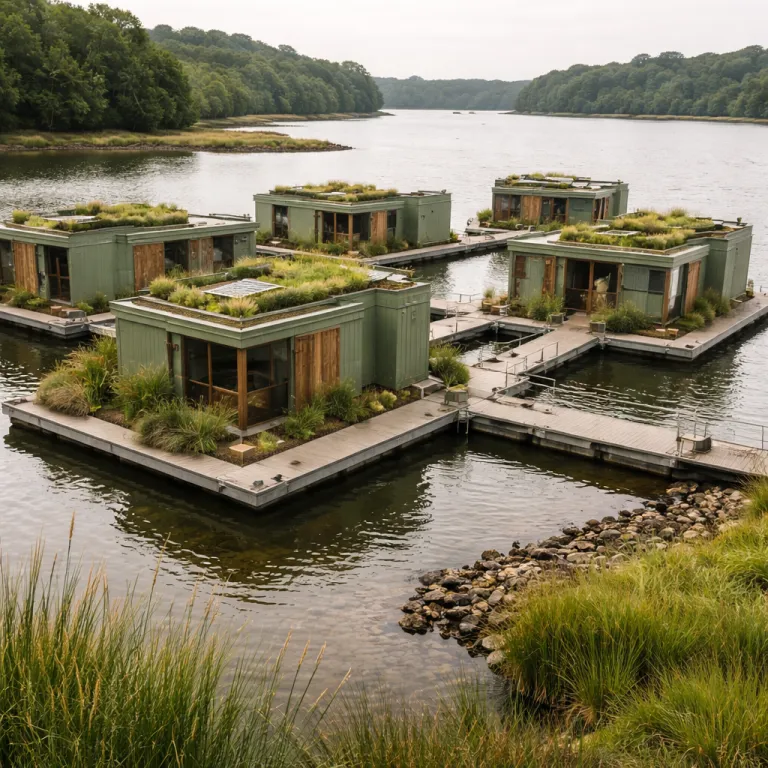
The climate case: from waterfront view to waterline reality
Step onto a well designed boat hotel today and you are stepping into a live experiment in floating architecture climate adaptation. What feels like a serene escape on the water is also a precise response to rising sea levels, shifting water levels and the hard arithmetic of coastal risk. For business leisure travelers used to glass towers on land, these floating structures quietly signal how future floating hospitality and housing will be built when the sea starts calling the shots.
Global mean sea level now rises about 3.5 millimetres per year, a pace that is already reshaping low lying urban areas and the waterfront real estate logic behind them. The Intergovernmental Panel on Climate Change (IPCC) and satellite records from agencies such as NASA and NOAA place recent rise in roughly the 3.3–3.7 millimetre per year range, confirming that this is not a speculative figure but an observed trend.1 Coastal cities that once relied on land reclamation and higher dikes are now testing floating development as a more flexible form of climate adaptation that moves with the water rather than fighting it. When you book a premium cabin on a moored catamaran in Rotterdam or a floating home style suite in Seoul, you are staying inside a prototype for how entire communities may soon handle climate change and the rising sea.
Architects define floating architecture as structures designed to float on water, adapting to changing water levels. That deceptively simple idea underpins a new generation of floating buildings, amphibious housing and floating amphibious concepts that can rest on land during low levels and rise with floods. For guests, the result feels like effortless waterside living; for planners, it is a serious urban adaptation tool that can be scaled from individual floating houses to a full floating city district, provided that local regulations, ecological impact assessments and long term maintenance plans are in place.
Behind the polished teak decks sit hard engineering choices about energy, materials and long term resilience. Firms such as Crossfloat are developing hybrid platforms that keep floating structures stable while integrating renewable energy systems and low impact building techniques. Their work, alongside climate focused architects like Koen Olthuis and studios such as Carlo Ratti Associati, is turning what began as isolated floating homes into coherent floating development strategies for entire waterfront areas. Independent engineers, however, note that these systems can still be more capital intensive upfront than conventional foundations, and that lifecycle performance data over several decades remains limited, a concern echoed in early cost benefit studies of amphibious housing and floating buildings.2
For travelers, the shift is already visible in how boat hotels are positioned within vulnerable coastal communities. In the Netherlands, for example, floating homes and floating buildings in flood prone districts are marketed not only for their design but for their role in protecting land based houses by absorbing part of the flood risk. When you choose a floating architecture stay in these cities, you are effectively supporting climate adaptation experiments that could later inform schools, offices and even floating farm projects, while also participating in a planning debate about who pays for, governs and insures these new water based districts.
Hospitality is also where the climate narrative becomes tangible rather than abstract. Instead of reading about sea level projections, you wake to the gentle adjustment of your floating home as water levels respond to tides, storms or river surges. That daily choreography between building and sea makes the case for floating architecture climate adaptation more persuasively than any policy paper, especially for executives who influence future real estate investment decisions and need to see how comfort, safety and regulatory compliance can coexist on the water.
Hospitality as testbed: boat hotels as climate adaptation laboratories
Luxury and premium boat hotels have become the quiet laboratories where floating architecture is stress tested under real world conditions. Operators must balance guest comfort, maritime regulations and climate adaptation requirements while keeping the experience seamless. For a business traveler extending a trip, that means your floating suite is not just a room with a view but a working prototype of how amphibious and floating structures behave over years, not just during an architectural photoshoot.
Unlike experimental floating city concepts rendered for planning conferences, boat hotels operate daily in complex urban waters. They must respond to fluctuating water levels, changing energy demands and the microclimate of harbours, rivers or sheltered sea areas. Nordic Season Houseboat, for instance, has reported that building on water for one of its flagship projects was up to 68 percent faster than a comparable project on land, a statistic that matters when climate change is accelerating flood risk for coastal communities.3 As with any company figure, the exact percentage depends on project scope and permitting context, but it illustrates the potential time savings when prefabrication and modular pontoons are combined.
That construction speed is not just a developer talking point; it directly affects how quickly climate adaptation solutions can be deployed in vulnerable cities. HDPE modular systems now allow regulation compliant floating structures to be assembled, relocated or expanded with minimal disruption to surrounding communities and marine ecosystems when properly installed. At the same time, marine biologists caution that shading, anchoring and increased boat traffic can alter local habitats, so serious projects now integrate ecological monitoring and habitat friendly design into their floating neighbourhood plans, drawing on impact assessments from urban waterfront ecology studies.4
Energy systems on these properties also foreshadow broader urban adaptation. Many premium boat hotels now integrate solar arrays, and the most forward looking operators are experimenting with floating solar platforms that share power between several floating buildings. Guests may not see the cabling beneath the decks, but they feel the benefits in quieter operations, reduced generator noise and a more stable energy profile during peak seasons. In some pilots, operators track kilowatt hour production and peak demand to demonstrate that floating hospitality can cut operational emissions compared with older diesel based setups.
Propulsion is evolving in parallel, and that matters even for mostly static floating architecture. Electric vessels entering the hospitality space show how zero emission shuttles and excursion boats can complement stationary floating structures without undermining their climate credentials. For readers interested in how this shift plays out on the guest side, a detailed look at electric boats as the next guest amenity reveals how climate adaptation and guest experience now move in lockstep, especially when charging infrastructure is integrated into the same floating platforms that support accommodation.
From a regulatory perspective, hospitality is often first in line to meet new maritime sustainability criteria. Upcoming maritime rules in many jurisdictions require full compliance with environmental standards, pushing operators to refine everything from grey water treatment to energy efficient building envelopes. Those same systems, once proven in the controlled environment of a boat hotel, can then be transferred to floating homes, amphibious housing clusters and even mixed use floating city districts, although planners still face questions about zoning, navigation rights and long term responsibility for shared infrastructure.
For guests, the benefit is twofold; you enjoy high service standards while staying inside an evolving climate adaptation ecosystem. The best properties communicate this with quiet confidence, explaining how their floating architecture supports local climate strategies without turning your stay into a lecture. That balance between comfort and purpose is precisely why hospitality has become the proving ground for serious floating architecture climate adaptation rather than a sideline of quirky stays, even as policymakers and insurers continue to test how these new districts perform under extreme weather.
From Dutch canals to global cities: lessons from early floating communities
Nowhere has the shift from novelty to necessity been clearer than in the Netherlands. Decades of living below sea level have made Dutch cities unusually comfortable with water as a building surface, not just a scenic backdrop. When you check into a high end houseboat in Amsterdam or a climate resilient floating home near Rotterdam, you are entering a lineage of experimentation that predates the current wave of climate change headlines and is now being documented in municipal adaptation plans and academic case studies.
Early Dutch projects treated floating homes as a niche within the wider housing market, but that framing is changing fast. Municipalities now integrate floating development into official urban plans, using floating structures to extend communities into sheltered water areas where traditional land reclamation would be costly or ecologically damaging. Guests staying in these districts experience a subtle but important shift; the water is no longer a boundary but an active part of the urban fabric, complete with its own building codes, emergency procedures and community associations.
Architect Koen Olthuis has been central to this evolution, arguing that water based architecture should be seen as a mainstream climate adaptation tool. His work, alongside that of engineering firms such as Crossfloat, shows how amphibious foundations and modular platforms can support everything from single family floating houses to larger floating buildings with mixed uses. For travelers, this means the line between a boat hotel and a permanent floating community is increasingly blurred, even though financing models, ownership structures and long term maintenance obligations can differ significantly.
Internationally, cities from Seoul to Busan and from Copenhagen to Saigon are now studying these Dutch precedents. Some focus on floating amphibious concepts that can rest on land during normal conditions and rise with floods, offering a hybrid between conventional building and full floating architecture. Others explore floating farm and floating solar installations that can sit alongside hospitality projects, turning underused harbour basins into productive climate adaptation zones. In several Asian and European pilots, local authorities track metrics such as flood storage capacity, added housing units and avoided land reclamation costs to evaluate whether these schemes should move beyond demonstration scale.
Design studios are also using hospitality to communicate the urgency of sea level rise in more visceral ways. Carlo Ratti Associati’s AquaPraca, a floating plaza concept, highlights how public spaces can move onto the water while drawing attention to the long term implications of rising sea levels for dense urban areas. When such ideas are paired with premium boat hotels nearby, guests can experience both the conceptual and the practical sides of floating architecture climate adaptation in a single walk, comparing speculative renderings with the moored structures where they actually sleep.
For business leisure travelers, these destinations offer more than a scenic backdrop for emails and evening drinks. They provide a front row seat to how real estate markets, planning authorities and local communities are rethinking living with water. The questions you hear at the marina bar are no longer about whether floating homes are safe but about when floating city districts will become a standard part of urban development portfolios, and how issues such as affordability, public access and ecological impact will be managed as these districts scale.
As one local planner in a Dutch waterfront municipality put it during a recent site visit, “What is floating architecture? Structures designed to float on water, adapting to changing water levels.” That simple definition now underpins a sophisticated mix of engineering, finance and community engagement that reaches far beyond the tourism sector. When you choose a floating architecture stay in these cities, you are effectively voting for that future with your booking, while also helping planners gather occupancy data, visitor feedback and operational insights that shape the next generation of projects.
When floating becomes default: what travelers should watch for next
The most interesting question for discerning travelers is no longer whether floating architecture works. The real question is when floating structures will become the default choice for new waterfront building while conventional land based projects become the exception. From a climate adaptation standpoint, that tipping point will arrive sooner in low lying cities where sea levels and flood risk already shape every real estate decision, but it will also depend on insurance availability, financing costs and public acceptance.
For guests, the signs of that shift will appear first in how destinations market their waterfront areas. Instead of promoting a single iconic floating hotel, cities will present entire floating neighbourhoods, with boat hotels, floating homes, offices and cultural venues sharing the same modular platforms. Booking a stay will feel less like choosing a novelty and more like selecting a preferred district within a broader floating city plan, complete with its own mobility options, energy systems and resilience features.
Speed of deployment will be another clear indicator. Nordic Season Houseboat’s experience of achieving construction on water significantly faster than on land shows how floating development can respond quickly to both tourism demand and climate emergencies. When you see new floating buildings appear within months in a harbour that previously relied on slow land reclamation, you are watching climate adaptation move from strategy document to visible reality, even if the underlying permitting and environmental review processes can still take years.
Energy and food systems will also evolve around these water based communities. Expect more properties to integrate floating solar fields that power not only guest rooms but also nearby public lighting, charging points and even electric shuttle boats. In some regions, pilot floating farm projects will sit adjacent to hospitality piers, turning calm sea or lake surfaces into productive landscapes that support both local communities and visiting guests, while also testing how aquaculture, recreation and navigation can coexist in crowded coastal zones.
For travelers choosing where to stay, a few practical checks can separate serious climate adaptation projects from superficial branding. Look for clear information on how the property manages water levels, storm events and long term maintenance of its floating structures. Ask whether the architecture is part of a wider municipal adaptation plan or simply a one off building; genuine integration with local communities and planning frameworks is a strong sign that your stay contributes to broader resilience, rather than just adding pressure to already sensitive waterfronts.
It is also worth paying attention to how resorts and marinas position their water based amenities. Some destinations now compete for waterfront guests by adding climate smart pontoons, floating pools and energy efficient overwater lounges, a trend explored in depth in this analysis of how resorts are adding floating amenities to compete for waterfront guests. When these additions are designed as part of a coherent floating architecture climate adaptation strategy rather than as isolated attractions, they can meaningfully support local climate goals, though they still need to be evaluated against criteria such as habitat disturbance, public access and long term upkeep.
Over the long term, the most compelling floating architecture destinations will be those where living, working and visiting coexist gracefully on the water. In such places, boat hotels will sit alongside permanent amphibious housing, cultural venues and even small scale floating development hubs for start ups working on climate solutions. For the executive traveler, that means your next waterfront stay can double as a reconnaissance trip into how cities worldwide are rewriting their relationship with water, sea level and the very idea of urban land, while also revealing the financial, regulatory and ecological trade offs that come with building a future that floats.
Key figures shaping floating architecture and climate adaptation
- Global mean sea level is rising at approximately 3.5 millimetres per year according to peer reviewed analyses of satellite altimetry data published in journals such as the Journal of Water and Climate Change and assessments by the IPCC, a rate that is pushing many coastal cities to treat floating architecture as a core climate adaptation strategy rather than a niche experiment.1
- Research cited by Illustrarch and similar summaries indicates that around 500 coastal cities could face significant flood risk by the end of the century, based on primary modelling work from organisations such as the World Bank and the OECD; this projection underpins growing interest in floating homes, amphibious housing and floating city districts as alternatives to traditional land reclamation.5
- Nordic Season Houseboat reports that one of its flagship projects achieved construction on water 68 percent faster than a comparable land based building, highlighting how floating development can accelerate the delivery of climate resilient accommodation and infrastructure, while also underscoring the need for independent benchmarking of costs, permitting timelines and long term performance.3
- Market analyses such as the Floating Homes Market Forecast 2026–2032 identify climate resilient living as a primary driver of demand, signalling that floating buildings and floating structures are moving from hospitality curiosities into mainstream real estate categories, even though transaction volumes and financing products are still emerging.6
- Regulatory roadmaps for the maritime sector indicate that new environmental sustainability criteria will become fully mandatory within the next planning cycle in many regions, effectively requiring boat hotels and other floating architecture projects to integrate advanced energy, waste and water management systems from the outset and to document their ecological footprint over time.7
1 Based on IPCC sea level rise assessments and satellite altimetry datasets from agencies such as NASA and NOAA. 2 See comparative cost and performance discussions in early amphibious housing and floating building feasibility studies. 3 Company communication and project reporting by Nordic Season Houseboat on construction timelines for selected houseboat developments. 4 Findings summarised in urban waterfront ecology and marina impact studies examining shading, anchoring and traffic effects on aquatic habitats. 5 Flood risk projections for coastal cities drawing on World Bank and OECD modelling, as referenced in secondary summaries including Illustrarch. 6 Commercial market research reports under the title Floating Homes Market Forecast 2026–2032 and similar analyses of climate resilient real estate demand. 7 Forthcoming maritime environmental standards and sustainability criteria outlined in regional regulatory roadmaps and policy briefs.