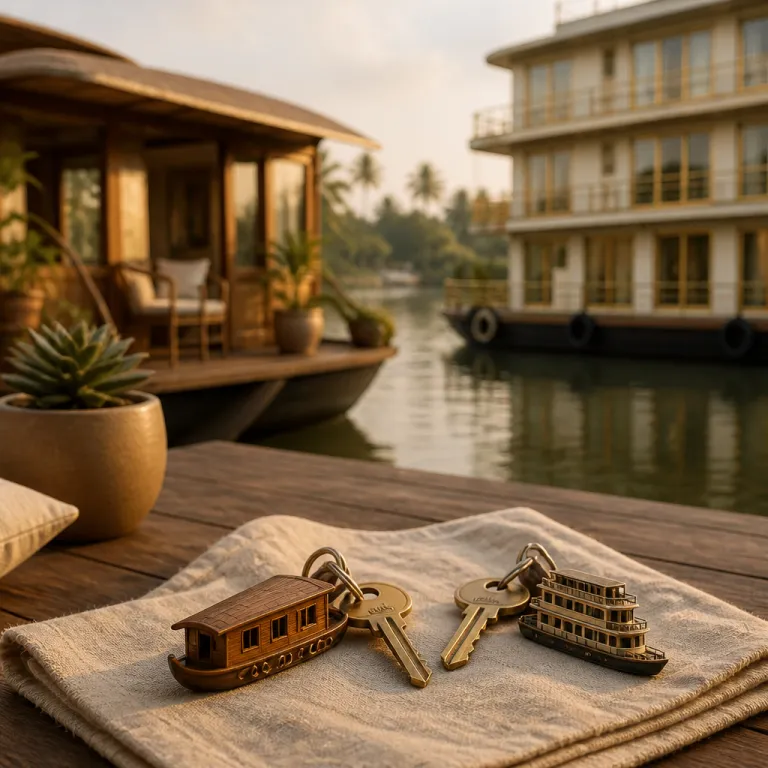
Understanding the real houseboat vs floating hotel difference
Choosing between a houseboat and a floating hotel starts with understanding how each one is built and classified. A houseboat is a self-propelled vessel with living amenities, while a floating hotel is a stationary structure on water with hotel services, and that single sentence captures the essential houseboat vs floating hotel difference for most guests. When you compare these two options, you are really choosing between a movable boat that behaves like a house and a fixed hotel that simply happens to float on water.
On regulated waterways in the United States, a houseboat is treated as a vessel and must meet United States Coast Guard standards, which means these boats are designed to navigate rivers, bays or a lake rather than remain tied permanently to one berth. Floating hotels, by contrast, rest on engineered platforms, fixed moorings or permanently attached barges, so they behave more like floating homes than like traditional boats and rarely, if ever, leave their position. This structural distinction explains why floating hotel stays feel closer to a conventional hotel experience, while houseboats feel like compact homes houseboats that just happen to be surrounded by water on every side.
When you look at the houseboat vs floating hotel difference from a pricing angle, industry data shows that the average cost per night for a simple houseboat starts around 200 USD, while many floating hotels position themselves in the 300 to 500 USD range with higher service levels. Luxury yacht hotels and high end boats can climb well beyond that, but for most people the key question is whether they want to pay for mobility or for amenities on land floating just a few metres away. In both cases, guests are paying for quality of location on the water and for the rare feeling of waking up in a house that rocks gently like a boat.
Guest experience: self-catered house life or full service floating hotel
The most tangible houseboat vs floating hotel difference appears the moment you step on board and start living your travel day. On a classic houseboat, you are entering a compact house on a boat, with your own galley kitchen, modest storage and the expectation that you will handle daily life almost as if you were at home. Floating hotels, on the other hand, are designed so that guests move through shared corridors, restaurants and lounges, receiving service in ways that mirror an upscale hotel on land.
For solo travelers and couples who enjoy independence, houseboats floating on a calm lake or in a sheltered marina can feel like private floating homes, where you cook your own food, set your own soundtrack and decide whether you want to cruise or stay put. Families often appreciate this format because children can treat the deck as an extension of the living room, while parents keep in mind safety rules and supervise movement around the water. If you are planning a family focused trip, guides to family friendly houseboats can help decide which boats and marinas are best suited to younger guests.
Floating hotels lean into amenities and service rather than self-catering, which means you trade the intimacy of a small house for the convenience of a staffed property with a reception desk, housekeeping and often a bar or spa. This is where the houseboat vs floating hotel difference becomes clear for business travelers, who usually prefer a floating hotel because it offers reliable Wi-Fi, meeting friendly lounges and food served on a predictable schedule. When you book either format through platforms such as Airbnb or Vrbo, read the listing carefully to see whether you are getting a self-contained houseboat, a room within a larger floating community or a hybrid concept that blends amenities on land with a floating structure.
Motion, stability and safety on the water
Another crucial houseboat vs floating hotel difference lies in how each structure responds to waves, tides and weather. A houseboat is a true boat, so it will move with passing wakes and wind, which can feel exhilarating for some guests and unsettling for others. Floating hotels are usually broader and more stable, sitting on large platforms that dampen motion and make the experience feel closer to a land based hotel with a gentle sway.
On a sheltered lake or canal, many modern houseboats floating at their moorings feel surprisingly stable, especially when fitted with wide beams and low centres of gravity. Once you take the boat out for a cruise, however, you must be comfortable with the idea that your house is now navigating among other boats, which requires attention to safety briefings, life jackets and local navigation rules. Floating hotels in urban harbours, such as the 250 room floating hotel project in Vancouver’s Coal Harbour, operate more like fixed properties, with professional marine engineers monitoring moorings and hotel teams coordinating safety drills for all guests.
For travelers sensitive to motion, the houseboat vs floating hotel difference can be the deciding factor, because a floating hotel usually offers the calmest sleep and the most predictable conditions. People who love the sensation of being at sea often prefer houseboats or even yacht hotels, accepting more movement in exchange for a closer connection to the water and to the surrounding floating communities of liveaboard residents. Whatever you choose, always check weather forecasts, verify safety measures and confirm booking details, because those three steps will help decide whether your stay feels like a serene floating home or an unexpectedly rough night on a small boat.
Who each format suits: matching traveler profiles to water stays
Once you understand the structural houseboat vs floating hotel difference, you can start matching each format to specific travel styles. Solo explorers and couples who value privacy, slow travel and the feeling of living like locals often gravitate toward houseboats, especially in cities with established floating communities such as Amsterdam or Sausalito. These boats function as compact homes where you can work, cook and sleep full time for a week or more, while the city hums just a short walk or tender ride away.
Floating hotels tend to suit business travelers, event guests and short stay visitors who want the romance of water without sacrificing the predictability of a hotel. For example, Sunborn Yacht Hotels in London and Gibraltar operate as full service properties with front desks, restaurants and meeting rooms, so people attending conferences can enjoy a floating setting while still accessing amenities on land within a few minutes. In these cases, the floating hotel is less about boat life and more about a distinctive address that still delivers the best elements of a conventional hotel stay.
Families and multigenerational groups often sit between these two extremes, weighing the freedom of a houseboat against the simplicity of a floating hotel. If you are travelling with children or older relatives, keep in mind how comfortable they are with ladders, narrow gangways and compact bathrooms, because these details shape daily life on smaller boats. For some groups, a canal boat itinerary in England, planned with the help of a detailed guide to canal boat holidays and costs, offers the best compromise between gentle cruising and easy access to amenities on land.
Booking channels, pricing and what to ask before you click
From a booking perspective, the houseboat vs floating hotel difference often appears in where and how each option is listed. Many individual houseboats are offered through peer to peer platforms such as Airbnb or Vrbo, where private owners present their boats as unique homes on the water. Floating hotels, by contrast, usually appear on mainstream hotel booking engines and through travel agencies, because they operate as regulated hospitality services with multiple rooms and standardized amenities.
Price ranges reflect this split, with simple houseboats starting around 200 USD per night and more polished floating hotels clustering between 300 and 500 USD, especially in high demand harbours. At the very top end, yacht hotels and design forward boats can exceed 1 000 USD per night, positioning themselves as alternatives to luxury suites on land. When you compare options, do not just look at the nightly rate ; pay attention to cleaning fees, marina charges and any extra costs for fuel if you plan to move the boat during your stay.
Before you click to confirm, ask very specific questions that relate to life on the water rather than life in a standard hotel. Clarify whether your stay is on a private houseboat, a room within a larger floating hotel or a unit in a cluster of floating homes, because each format comes with different levels of privacy and service. You should also ask about parking on land, luggage transfers, check in procedures at the marina and whether amenities on land such as gyms or spas are included, since these details will shape how easily you move between your floating base and the city or countryside around you.
Living on the water: floating communities, practicalities and long term stays
For some travelers, a short stay is just a first step toward understanding the deeper houseboat vs floating hotel difference that shapes entire floating communities. Around the world, clusters of homes houseboats form neighbourhoods where people live full time on the water, paying moorage fees instead of traditional property taxes and building social networks along the docks. These floating communities often sit beside or even within marinas that also host floating hotels, creating a layered waterfront where visitors and residents share the same gangways and cafés.
If you are considering an extended stay, perhaps to test whether boat life suits you, a longer rental on a houseboat can provide a realistic sense of daily routines. You will learn how to manage utilities, monitor weather, coordinate with marina staff and balance the pleasures of water views with the practicalities of limited space. Floating hotels are less suited to this kind of experiment, because they shield guests from most operational details and focus instead on delivering consistent service and hotel style amenities on land just a short walk away.
Travel industry observers often summarise the core distinction in simple terms by saying, “What is the main difference between a houseboat and a floating hotel? A houseboat is a self-propelled vessel; a floating hotel is stationary.” That clarity helps decide whether you want your next trip to feel like moving into a small house that happens to be a boat, or like checking into a hotel that happens to sit on water. Either way, the growing news coverage of innovative floating homes and new floating hotel projects suggests that water based stays are moving from niche curiosity to a permanent, high quality segment of the global hospitality landscape.
Key figures on houseboats, floating hotels and guest demand
- Average cost per night for an entry level houseboat is around 200 USD according to travel industry reports, which positions many boats as competitive alternatives to midscale city hotels.
- Typical occupancy rates for distinctive water based accommodations hover near 75 %, a figure reported in hospitality statistics that reflects strong demand for experiential stays.
- Floating hotel nightly rates commonly fall between 300 and 500 USD in major harbours, placing them in the upper midscale to luxury segment of the market.
- Yacht hotels and ultra premium boats often start around 1 000 USD per night, targeting guests who might otherwise book high category suites in landmark city hotels.
- Industry analysts tracking the growth in eco friendly and experiential travel note a steady increase in the number of floating hotel projects announced each year, especially in urban waterfront regeneration zones.
FAQ about houseboats and floating hotels
What is the main houseboat vs floating hotel difference for guests ?
The main difference is that a houseboat is a self-propelled vessel with living amenities, while a floating hotel is a stationary structure on water with hotel services. For guests, this means a houseboat offers more independence and potential mobility, whereas a floating hotel delivers a more traditional, full service hotel experience. Your choice depends on whether you value movement and self-catering or stability and staffed amenities.
Are houseboats more expensive than floating hotels for short stays ?
Costs vary widely, but simple houseboats often start around 200 USD per night, while many floating hotels sit in the 300 to 500 USD range. Houseboats can carry higher maintenance expenses for owners, yet guests may benefit from lower nightly rates outside peak seasons. Floating hotels usually charge more because they offer extensive services, larger teams and prime waterfront locations.
Do floating hotels usually offer more amenities than houseboats ?
Floating hotels often provide more extensive services and facilities, including reception desks, housekeeping, on site dining and sometimes spas or meeting rooms. Houseboats typically offer private kitchens and living spaces but rely on nearby marinas and neighbourhoods for restaurants and leisure facilities. Travelers who prioritise amenities and service usually lean toward floating hotels, while those seeking privacy and autonomy prefer houseboats.
Which option is better for families with children ?
Families who enjoy self-catering and space often appreciate houseboats, especially on calm canals or lakes where movement is gentle. However, parents must be comfortable supervising children closely around water and managing compact layouts. Floating hotels can be easier with young children because they provide stable walkways, housekeeping and quick access to amenities on land.
How should I research and compare water based accommodations before booking ?
Start by reading detailed online reviews, consulting specialised travel guides and using booking platforms that clearly label houseboats and floating hotels. Compare amenities, safety measures, location and access to services on land, not just the nightly rate. When in doubt, contact the host or hotel directly to clarify motion levels, check in logistics and what is included in your stay.