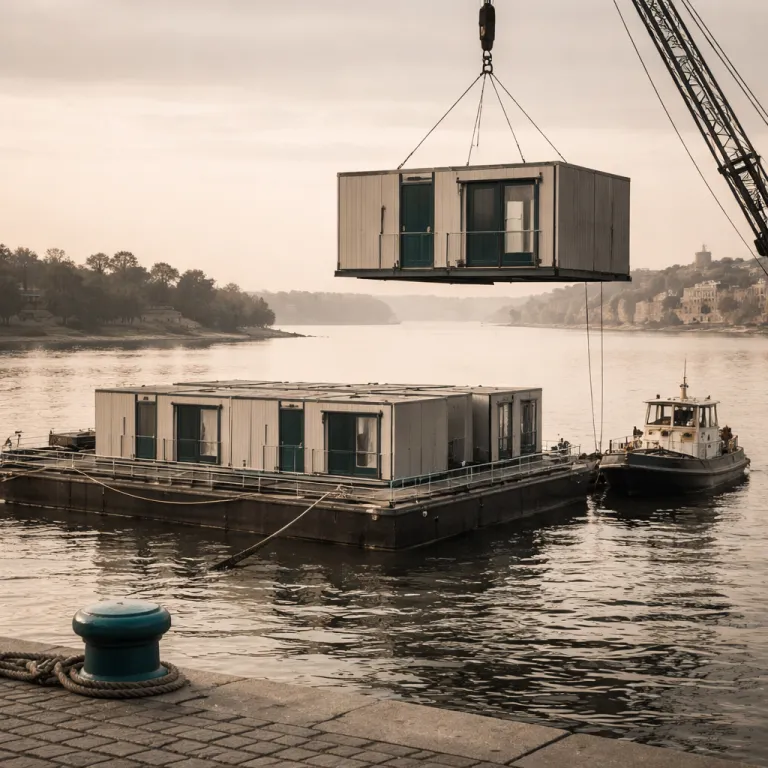
Stockholm floating hotel stays along the inner waterfront
Stockholm is a city that makes water feel like part of the street plan. A Stockholm floating hotel places you directly on that waterline, turning every stay into a quiet dialogue between ship, harbour and skyline. From the first step on deck, the city feels closer, the air sharper, and the sense of travel more deliberate.
Along Söder Mälarstrand, several historic ship conversions offer some of the most popular floating hotel and hostel options in Stockholm, Sweden. Den Röda Båten, often called the Red Boat by regulars, operates as a floating hostel with compact cabins and a relaxed bar, while Rygerfjord Hotel & Hostel stretches across three moored vessels with both private rooms and dormitories. These floating hotels and boat hostels sit within walking distance of Gamla Stan, Stockholm City Hall and the metro station at Slussen, which keeps your houseboat stay firmly plugged into the urban rhythm.
On nearby Riddarholmen, Mälardrottningen Yacht Hotel delivers a more classic yacht experience, with a ship built to cruise now anchored as a permanent boat hotel. Cabins are small but cleverly planned, and the restaurant bar on the upper deck frames a magnificent view of the city and the Baltic Sea inlet. Guests who stay on this yacht often comment that Stockholm’s beautiful skyline feels almost close enough to touch from the rail.
Further along the quay, Loginn Hotel and Prince Van Orangiën continue the theme of maritime heritage repurposed for modern travel. Each ship hotel offers its own interpretation of cabins, from wood-panelled nostalgia to cleaner Scandinavian lines, yet all share the same essential Stockholm floating accommodation promise of water-level proximity and constantly shifting light. Floating hotels in Stockholm offer unique stays on the water. Many travellers choose to base themselves on these vessels rather than in conventional hotels, trading floor space for character, history and a front-row view of passing ferries.
Nordic Season’s archipelago complex and the rise of waterborne luxury
Beyond the inner harbour, the Stockholm Archipelago is becoming a second stage for the floating hotel story. Nordic Season Houseboat has developed a multi-unit floating hotel complex out among the islands, positioning Stockholm, Sweden as a serious player in high-end boat-stay experiences. The project shows how Nordic design, maritime engineering and hospitality can align when the brief is simple yet ambitious: create a floating hotel that feels like a low-slung island village.
The complex is arranged as a cluster of contemporary cabins connected by timber walkways, each cabin oriented for a wide view across the Baltic Sea rather than towards neighbouring units. Inside, the design language is restrained and tactile, with pale woods, wool textiles and an almost art deco sense of geometry in some of the lighting and built-in furniture. Guests who stay in these cabins experience the quiet of the archipelago while still enjoying hotel-level amenities, including a central floating restaurant and spa that anchor the community.
Construction of this purpose-built complex reportedly took around four to six months, compared with roughly a year or more for a comparable land-based hotel, according to figures shared by Nordic Season in project presentations. That faster build time matters for a region where seasons are short and demand for the best waterfront hotels is rising, and it helps explain why Finland and the wider Nordic region are emerging as important markets for floating accommodation. For travellers used to canal boat holidays in England or river cruises in France, this archipelago hotel offers a different rhythm, more static than a cruise yet more aquatic than any land hotel: a hybrid that rewards slow travel and repeated visit patterns.
From a practical perspective, reaching the Nordic Season boat hotel complex usually involves a combination of metro access in the city, followed by a scheduled ferry or private boat transfer of thirty to sixty minutes, depending on the route. Many guests choose to split their time between an inner-city floating hotel or hostel and a few nights out in the archipelago, using the same trip to compare two distinct faces of Stockholm’s waterfront life. For detailed planning of multi-stop water-based itineraries, resources that explain canal boat holiday logistics and booking strategies, such as guides to canal boat holidays in England, can be surprisingly helpful references when you adapt their principles to Swedish waters.
Inner city waterline vs archipelago retreat: two Stockholm narratives
Staying on a Stockholm floating hotel in the inner city feels like sleeping in the wings of a theatre. The stage is the skyline of Stockholm, Sweden, with City Hall, the Royal Palace and Gamla Stan all playing leading roles among the attractions. Out in the archipelago, the script changes: the cast thins to pine trees, low skerries and the long horizon of the Baltic Sea.
In town, the best things to do from a boat stay are tightly woven into the urban grid, and most major attractions sit within comfortable walking distance or a short metro hop. From Den Röda Båten or Rygerfjord Hotel & Hostel, you can walk to City Hall for the classic tower view, cross to Gamla Stan for medieval lanes and continue to the Royal Palace, then ride a ferry to Djurgården for the Vasa Museum in a single, well-paced day. Evenings tend to revolve around restaurant and bar choices, whether you stay on board for a restaurant bar with a magnificent view or head ashore to explore Stockholm’s popular dining districts.
By contrast, an archipelago boat hotel stay is about space, silence and the slow choreography of ferries and fishing boats. Here, the attractions are less about museums and more about the quality of light on the water, the feel of a morning swim and the pleasure of returning to a warm cabin after a wind-chilled walk. It is a setting that pairs naturally with other high-craft waterborne experiences, such as the refined river cruising offered by Belmond’s Marguerite in Burgundy, where the emphasis falls on design, gastronomy and landscape rather than ticking off city sights.
Both modes of staying in Stockholm share a commitment to compact, efficient cabins that respect the constraints of a ship-built environment. The difference lies in tempo: inner-city boat hotels and hotel hostels keep you plugged into Stockholm’s cultural life, while archipelago cabins encourage you to edit your schedule down to a handful of essential things. Many seasoned travellers now structure their visit to alternate between these two narratives, using a few nights in town as a prelude to a longer, more contemplative boat stay among the islands.
How Nordic design shapes Stockholm’s floating architecture
Nordic design has always favoured clarity, honest materials and a close relationship with light. On a Stockholm floating hotel, those principles become more than aesthetic choices: they are functional responses to limited space, constant movement and the need to frame the view. When you step into a well-considered cabin, you feel how every line, hinge and shelf has been argued over.
Historic vessels such as Prince Van Orangiën or the Loginn Hotel show one side of this evolution, where original ship-built structures meet updated interiors that lean towards Scandinavian simplicity. Panelled corridors open into cabins where beds are often built into the hull curve, storage tucks under benches and portholes or slim windows pull in a surprising amount of daylight. In several of these hotels and hostels, designers have introduced subtle art deco references in lighting, mirrors and bar detailing, creating a bridge between the ship’s original era and contemporary expectations of comfort.
Nordic Season’s newer archipelago complex represents the other side of the spectrum, where the floating hotel is conceived from the outset as architecture rather than as a converted ship. Here, the cabins read more like low-rise waterfront villas, yet the engineering below the waterline remains firmly maritime. The central restaurant bar and spa are designed as social anchors, with large windows and terraces that turn every meal or treatment into an encounter with the magnificent view across the Baltic Sea.
Across Stockholm, Sweden, this design intelligence extends to circulation, privacy and acoustics, which are critical in any boat stay where steel hulls can amplify sound. Walkways are staggered to prevent direct sightlines into cabins, public bars are often positioned at the bow or stern to keep late-night noise away from sleeping areas, and insulation is carefully layered to soften both engine hum and wave slap. For travellers who care about design as much as destination, these Stockholm floating hotel projects sit comfortably alongside other high-craft waterborne stays, from Monaco street yacht experiences where city glamour meets sea-going luxury to slow canalside cruises in continental Europe.
Planning your Stockholm floating hotel stay: seasons, logistics and booking
Planning a Stockholm floating hotel stay begins with a simple choice between inner-city quays and the wider archipelago. Both options keep you close to the water, yet they serve different travel moods and different lists of preferred things to do. Many guests resolve the dilemma by splitting their time between at least two properties, one central and one island-based.
For a first visit focused on popular attractions, an inner harbour boat hotel or hostel makes practical sense. Properties along Söder Mälarstrand and Riddarholmen place you within walking distance of City Hall, Gamla Stan, the Royal Palace and the ferry routes to Djurgården for the Vasa Museum and other cultural highlights. Public transport is straightforward, with metro access never far from the quays, and most floating hotels in Stockholm, Sweden operate year round, though winter stays require a taste for crisp air and early twilights.
Archipelago stays demand a little more planning but reward that effort with a deeper sense of escape. Transfers to complexes such as Nordic Season’s floating hotel usually involve timed boats, so aligning arrival and departure with ferry schedules is essential, especially if you are connecting to long-haul flights or rail journeys. Waxholmsbolaget ferries and seasonal archipelago services typically run more frequently in summer and on weekends, while winter timetables can be limited, so always confirm current routes and departure times before you travel.
Rates for Stockholm floating hotel stays typically sit around the mid-range to premium bracket, with an indicative average nightly rate near one hundred and fifty United States dollars for standard cabins and higher prices for suites or spa packages. Actual prices vary by season and property, so it is worth checking current offers directly with each hotel or hostel. Many properties in Stockholm’s harbour offer flexible cancellation policies, which is useful if you are threading a boat stay into a longer Scandinavian itinerary that might also include other water-based experiences in Norway or Finland. As interest in distinctive accommodations grows and maritime tourism expands, an emphasis on sustainable tourism practices is reshaping how travellers think about where they sleep between one shore and the next.
Hidden gem boat stays and how to choose the right ship
Among the main floating hotels in Stockholm, a few feel like genuine hidden gems for travellers who value character over square metres. Prince Van Orangiën, a Dutch ship built in the nineteen-thirties and now moored at Beckholmsbron near Djurgården, offers only seven cabins, which turns each stay into something closer to a private yacht charter than a conventional hotel booking. The sense of intimacy is heightened by the short gangway, the low deck and the way the city seems to pause just beyond the rail.
Den Röda Båten, the Red Boat hostel near Söder Mälarstrand, occupies a different niche yet still qualifies as a Stockholm floating hotel experience worth seeking out. Its cabins are simple, but the atmosphere in the shared bar and lounge is warm, and the magnificent view towards Gamla Stan and City Hall costs far less here than in many land-based hotels. Rygerfjord Hotel & Hostel, with its trio of ships, offers a flexible mix of private rooms and dormitories that suits solo travellers, couples and small groups who want to stay on the water without sacrificing access to the city’s best attractions.
When choosing between these ships and the larger boat hotel options, think in terms of priorities rather than star ratings. If you want a restaurant bar on board and a full-service hotel environment, Mälardrottningen or an archipelago complex may suit you better than a smaller hostel-style Red Boat. If your ideal boat stay is about quiet mornings, a short walking distance to favourite cafés and the feeling of being gently held between city and sea, then a compact hotel-hostel cabin on a historic vessel might be the best match.
Across all these properties, the same core advice applies to anyone planning a Stockholm floating hotel visit. Do floating hotels operate year round? Most operate year round, but it is best to check specific hotels. Are there dining options on floating hotels? Many have onboard restaurants or are near dining establishments. Are floating hotels in Stockholm suitable for families? Yes, many offer family-friendly accommodations. These straightforward answers, combined with your own preferences for design, location and level of service, will guide you towards the ship that feels less like a novelty and more like a temporary home port.
FAQ about Stockholm floating hotel stays
Are Stockholm floating hotels suitable for families and longer stays?
Many Stockholm floating hotel properties are suitable for families, especially larger ships such as Rygerfjord Hotel & Hostel or Mälardrottningen, which offer a range of cabin sizes. For longer stays, look for cabins with generous storage, good Wi-Fi and access to shared lounges, since space on board is always more compact than in land-based hotels. Families often appreciate being within walking distance of major attractions, which makes inner-city quays more practical than remote archipelago locations.
How do floating hotels in Stockholm compare with traditional hotels on price?
Average nightly rates for a Stockholm floating hotel tend to sit around the mid-range bracket, with typical prices near one hundred and fifty United States dollars for standard cabins. This is broadly comparable with well-located three- to four-star hotels in central Stockholm, Sweden, though peak season and special events can push rates higher. What you gain is the character of a boat stay and a direct view of the water, balanced against slightly smaller room sizes.
Do Stockholm floating hotels operate throughout the year?
Most floating hotels and hostels in Stockholm operate year round, thanks to sheltered moorings and robust ship-built structures. Winter stays can feel particularly atmospheric, with crisp air, early sunsets and the city lights reflecting off the water, but they require warm clothing and a taste for quieter streets. It is always wise to confirm seasonal operations and any maintenance closures directly with the hotel or hostel before you book.
Which attractions are easiest to reach from inner city floating hotels?
From quays such as Söder Mälarstrand and Riddarholmen, you can walk to City Hall, Gamla Stan and the Royal Palace in under thirty minutes, depending on your pace. Ferries and buses from nearby stops connect quickly to Djurgården for the Vasa Museum and other museums, while metro access keeps the wider city within easy reach. This makes inner harbour boat hotels ideal for travellers who want to combine a distinctive stay with efficient sightseeing.
What should first time guests know before booking a Stockholm floating hotel?
First-time guests should expect cabins to be smaller than standard hotel rooms, with clever storage and sometimes narrower beds, especially on older ships. Light motion from waves and occasional harbour noise are part of the experience, so travellers who are very sensitive to movement may prefer larger, more stable vessels or archipelago complexes designed as floating platforms. Booking early for peak seasons, checking whether your preferred ship has a restaurant bar on board and confirming proximity to public transport will help ensure a smooth and rewarding stay.