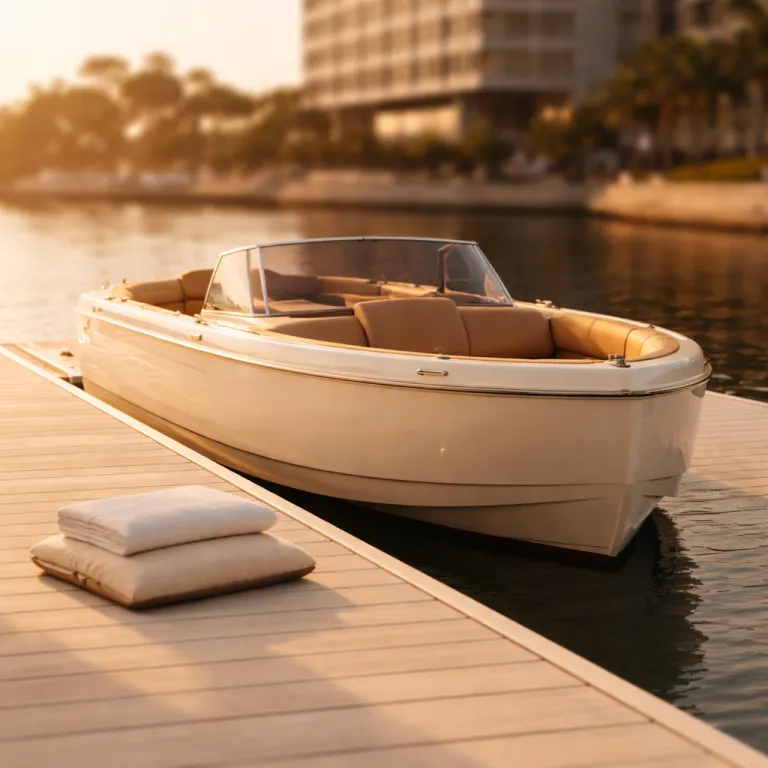
Electric boats hospitality moves from pilot project to core amenity
Electric boats hospitality has shifted from niche experiment to serious hospitality infrastructure. A 2023 strategic business report on electric boats from IDTechEx projects rapid adoption across guest transport, private charters and guided boating experiences as emission rules tighten in major marine destinations. For travelers, that means the quiet hum of an electric boat replacing the diesel rattle on lagoon transfers, fjord safaris and lake crossings.
Manufacturers such as Duffy Electric Boats, X Shore and Vision Marine Technologies now design electric boats specifically for hotels and eco-resorts. Their marine technologies pair high performance electric propulsion with refined onboard design, so the same energy system that cuts emission also supports chilled champagne, silent cruising speed and stable power for lighting. In parallel, a growing boats market for rentals lets properties test electric boating through sharing models before investing in a full fleet.
Industry data and supplier case studies already track more than 150 hotels and resorts offering electric boat services as part of their amenities, from Alpine lakes to urban marinas, including properties on Lake Garda, Lake Lucerne and the Stockholm archipelago. These properties integrate charging infrastructure, digital booking systems and tailored energy systems to manage battery capacity and energy consumption across daily operations. For guests, the practical advice remains simple; check availability in advance, ask whether the operator follows local coast guard safety rules and explore package deals that bundle room, transfers and electric boating time.
Smoother guest journeys, lower emissions and new design standards
On the water, the difference between traditional boating and electric boating is immediate. There is no fuel smell, vibration is minimal and the only soundtrack is hull against water and conversation, which changes how solo travelers experience sunrise crossings or night returns from dinner. At Norway’s Svartisen waterfront lodges, for example, managers report higher guest satisfaction scores on electric boat transfers, especially on sensitive lakes and in narrow canals where noise once echoed between quays.
From a technical angle, today’s electric boat fleets rely on lithium ion battery packs sized to local routes and typical cruising speed. A typical 40–80 kWh battery bank can support two to four hours of slow cruising, with overnight charging on solar electric pontoons or grid connections, in line with ranges published by X Shore and Candela for their day-cruiser models. Operators monitor kWh use per trip to fine tune energy consumption, balancing high performance needs with the realities of renewable energy supply and turnaround times between guest journeys.
Safety and regulation questions surface frequently as adoption accelerates in marine parks and urban harbours from Scandinavia to Hong Kong. In Europe, inland waterways rules generally treat small electric boats like conventional day boats, while in North America the U.S. Coast Guard applies the same basic operator licensing thresholds to electric propulsion as to petrol engines. Guest feedback quoted in hotel surveys is straightforward: “The boat felt stable, quiet and easy to board,” notes one couple after a night transfer in British Columbia. For travelers comparing stays, checking whether skippers hold local commercial licenses and whether boats carry certified lifejackets offers a quick way to assess professional standards.
Where regulations, markets and sharing models are pushing fastest
Regulatory pressure is now the strongest tailwind for electric boats hospitality in protected waters and dense cities. Maritime emission standards in regions such as the Nordics, parts of North America and selected Asian hubs are phasing out high emission engines, which nudges hotels toward fully electric or hybrid propulsion fleets. National parks that once limited boating access now work with tourism boards and boat manufacturers to run low impact electric boating safaris instead of diesel tours.
Eco-resorts lead the charge, but urban properties are catching up as the boats market matures and costs spread across rental and sharing schemes. In places like Hong Kong, marina shuttles and harbour cruisers are testing solar electric charging pontoons and modular battery swaps to keep energy systems running through long service days, with typical fast-charging stops of 30–60 minutes between peak periods. For travelers choosing between waterfront stays, a hotel that offers quiet electric boat transfers can now sit alongside refined rooms such as those at the Marina Hotel in Brooklyn, profiled in boat-stay.com’s guide to a premium stay in Bushwick.
Manufacturers including Vision Marine Technologies and Flux Marine see commercial hospitality fleets as a route for electric boats to reach billion scale in the wider marine market. Their latest generation hulls optimise design for low drag, which reduces energy consumption per kWh and extends range on a single battery charge, a priority echoed in recent product launches at the Miami International Boat Show. For solo explorers, the practical takeaway is clear; when you see electric boats listed among amenities, you are booking into a property where environmental performance, guest comfort and forward looking marine technologies meet on the same stretch of water.