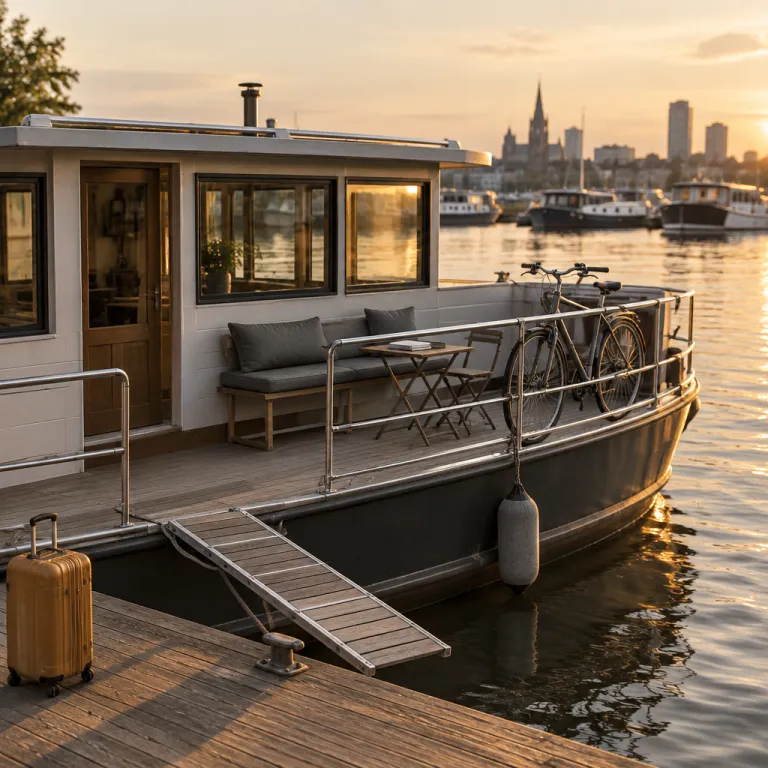
Why a city boat stay changes how you read the waterfront
A well chosen city boat stay shifts your entire sense of place. From a moored boat you read the waterfront as the city’s original front door, watching working craft, river trams and kayaks share the same water that once carried merchants and fishermen. That perspective quietly reframes a short vacation into something closer to a residency on the shoreline, where the rhythm of tides and traffic replaces the anonymous corridor of a high rise.
On a boat you gain a different kind of quiet, even in a dense city. The hull buffers street noise while the water itself absorbs sound, so your stay often feels like a private sanctuary just a few metres from the nearest café terrace. That contrast between urban energy and gentle motion is what many travellers remember long after a conventional waterfront suite has faded from memory.
There is also a subtle social shift when you sleep on the water. You share space with local residents who treat the marina as their neighbourhood, not as a transient lobby, which ensures more authentic conversations and recommendations. In many European capitals the most interesting stories about the city’s past remain tied to its river channel, so waking up on deck places you in the front row for that ongoing narrative.
For travellers used to lake resorts or coastal vacation rentals, a city boat stay feels both familiar and sharper edged. You still have the comfort of being close to water, but the view is trams, bridges and markets instead of distant headlands. That mix of natural beauty and urban theatre is why a serious city waterfront boat stay guide always starts with vantage point, not thread count.
Think of the boat as a compact, fully equipped apartment that just happens to float. Space is tighter, yet the design often remains more thoughtful than many land based rooms, especially when a private balcony or foredeck extends your living area. For solo travellers and couples, that balance between intimacy and openness can turn a standard city break into a quietly luxurious escape.

Location, mooring and how to read a city marina map
The single biggest decision in any city waterfront boat stay guide is where the hull actually sits. A central city marina can look perfect on a map, yet in reality be wedged beside a working shipyard or a nightclub barge that thumps until dawn. Before you book, zoom in on satellite images, trace the river channel or canal, and ask yourself whether the surrounding streets feel like somewhere you would happily walk at midnight.
Distance to transit matters more on water than on land. A mooring that seems only one kilometre from the historic centre can feel far if the route crosses an unlit industrial zone or a windswept bridge with no pavement, so always check walkability and late night safety. In some cities, such as Vienna or Budapest, houseboats cluster along long embankments where tram stops and metro stations sit a short stroll away, which ensures your stay remains practical as well as romantic.
Noise is the other major variable that maps rarely show. A quiet looking bend in the river might host party boats every weekend, while a modest marina upstream could feel like a genuine sanctuary after dark. When you read reviews of houseboats on the Danube, especially in guides to Vienna, Budapest and beyond such as specialist Danube houseboat articles, pay close attention to mentions of barge horns, club music and early morning delivery traffic.
Harbour infrastructure also shapes your daily routine. Some city marinas sit beside supermarkets, bakeries and tram stops, while others remain isolated behind security gates with no services within easy reach, which can turn a simple coffee run into a multi day logistics exercise. Ask hosts for precise details about gates, codes and whether the pontoon is shared with long term liveaboards, because their presence often ensures better lighting, maintenance and informal security.
Finally, consider how exposed the mooring is to wind, swell and passing traffic. A boat tied on the outside of a pier along a busy river channel will move more than one tucked deep inside a basin, and that motion may feel charming for one night but tiring over a longer stay. For travellers prone to motion sensitivity, a protected berth inside a calm marina basin is worth prioritising over the most dramatic skyline view.

Practicalities on the water: luggage, access and safety after dark
Arriving at a city boat stay is not like rolling a suitcase into a lobby. You may cross narrow gangways, step down steep companionways or navigate floating pontoons that shift underfoot, so pack with soft luggage and keep one hand free. This is where a serious city waterfront boat stay guide earns its keep, by spelling out the realities that glossy photos tend to crop away.
Check in logistics deserve clear answers before you commit. Ask whether someone will meet you at the marina gate, whether access codes change during your stay, and how late arrivals are handled if your train or flight runs behind schedule. In some cities the marina office closes early, which means a host who remains reachable by phone or messaging app effectively ensures you are not stranded outside a locked pier after dark.
Security on the water usually feels intuitive but still needs structure. Look for properties where the pontoon has controlled access, where neighbouring boats appear well kept, and where lighting along the shoreline and approach paths looks continuous rather than patchy. In central Paris, for example, many houseboats along the Seine combine coded gates with resident communities, and guides to sleeping on the Seine in Paris often highlight how that mix of local eyes and formal barriers keeps the atmosphere relaxed.
Luggage management is another overlooked detail. Some boats offer small dockside storage or help with heavier bags, while others expect you to carry everything along the pier and down into the cabin, which can be challenging after a long travel day. If you plan a longer stay with more gear, ask whether early bag drop is possible so you can explore the city unencumbered while the crew prepares the interior.
Finally, think about safety in motion. Even in a quiet marina, decks can be slick with rain, and tide or river level changes may alter the angle of gangways overnight, so non slip footwear and a small headlamp are more useful than another pair of shoes. Treat the boat as you would a modest sailing yacht rather than a static apartment, and your comfort level on board will rise quickly.
Matching your boat stay to your trip style and pace
Not every city boat stay suits every kind of trip. A solo explorer who wants to walk ten kilometres a day through galleries and markets needs a very different mooring from a couple planning a slow reading retreat on deck. The art lies in matching the boat, the marina and the surrounding neighbourhood to the rhythm you want from your vacation.
For sightseeing heavy itineraries, prioritise central locations with strong transit links over the most secluded basin. Being able to step from your boat to a tram stop in three minutes often ensures you see more of the city without sacrificing the pleasure of returning to the water each evening. In this case, a compact but fully equipped cabin with good heating, ventilation and a small desk may matter more than a vast private balcony that you rarely use.
When your goal is a quiet reset, look for moorings on the edge of the city where the shoreline feels softer and the traffic thins out. A boat tied near a riverside park or residential quay can become a genuine sanctuary, especially if there is easy beach access or a small private beach nearby for early swims. Guides to sleeping on the Seine in Paris, for instance, often contrast central quays with calmer stretches upstream where joggers and dog walkers replace tour buses.
Trip length also shapes what you need on board. For a single night, you can tolerate steeper stairs, compact showers and limited storage, but for a multi day stay you will appreciate thoughtful details such as hanging space, a proper galley and reliable Wi Fi. Treat the listing as you would a serious apartment rental, reading between the lines for signs that the host understands longer stays rather than quick photo led turnovers.
Finally, consider how social you want your base to feel. Some marinas host cafés, small bars and communal decks where you naturally meet other travellers and local liveaboards, while others remain almost monastic after sunset. Neither is inherently better; the right choice is the one that aligns with how you like to end your day in a new city.

From lakes to river channels: what city lessons Charlevoix and northern Michigan teach
Freshwater destinations such as Charlevoix in northern Michigan offer useful lessons for urban boat stays worldwide. Around Lake Charlevoix and Round Lake, travellers have long treated the waterfront as both a playground and a neighbourhood, moving between marinas, city streets and nearby trails in a single afternoon. That easy flow between water and town is exactly what you should seek when choosing a boat base in any major city.
In Charlevoix, the Pine River channel links Lake Charlevoix to Lake Michigan, threading past the city marina and under low bridges where pedestrians pause to watch boats slide through. Staying on a boat here gives you a literal front row seat to that choreography, and the same principle applies when you moor beside a busy river channel in an urban centre abroad. You want a berth where the movement of watercraft feels like theatre, not like a constant industrial rumble.
Local specialists such as Brook Walsh, who curates Michigan Escapes and high end vacation rentals around northern Michigan, are often cited by regional travellers as examples of hosts who understand how much location shapes the feel of a stay. Properties that sit a short stroll from town yet still offer a quiet, private corner by the water consistently perform better than isolated cabins with no sense of community. The same logic holds when you weigh up a central city marina against a remote dockyard berth in a foreign capital.
Many lakefront properties in this region blend natural beauty with practical comfort, pairing a private beach or easy beach access with fully equipped interiors and generous decks. On the water, that translates into boats with thoughtful layouts, good insulation and perhaps a small waterfront suite style cabin that opens directly onto a terrace or private balcony. When a host in any city describes their boat in similar terms, it often signals a higher standard of maintenance and guest care.
Seasonality is another shared lesson between northern resorts and urban rivers. In northern Michigan, events such as the Venetian Festival turn the harbour into a lively amphitheatre where a moored boat becomes a literal front row seat, while shoulder seasons remain quieter and more reflective. City rivers follow similar cycles of events and crowds, so always ask how your chosen dates align with local festivals, regattas or concert series that might transform the character of your stay.
Questions to ask before you book a city boat stay
A reliable city waterfront boat stay guide always ends with a checklist. Before you confirm any reservation, send the host a concise set of questions that probe beyond the marketing language and into the lived reality of the boat and its surroundings. Their answers will tell you as much about their professionalism as about the property itself.
Start with access and logistics. Ask exactly how you reach the marina from the main train station or airport, whether late night arrivals are straightforward, and what the approach feels like after dark. Clarify how check in works, who meets you, and whether there are any quirks such as low bridges, tidal steps or narrow gangways that might affect your comfort with luggage.
Next, move to comfort and noise. Request honest descriptions of typical sound levels at night, including any nearby bars, road traffic, working docks or party boats that might affect a quiet sleep, and ask whether the hull sits in a sheltered basin or directly on a busy river channel. Confirm details about heating, cooling, ventilation and insulation, because water amplifies temperature swings more than most first time guests expect.
Then, focus on the surrounding neighbourhood. Ask what the area feels like at different times of day, where the nearest grocery store and café sit, and whether locals treat the quay as a promenade, a shortcut or a nightlife strip. You want to hear about everyday routines, not just postcard views, because that texture ensures your stay feels grounded in the city rather than floating above it.
Finally, clarify what is included on board. A serious host will list safety equipment, galley facilities, Wi Fi, linens and any shared spaces on the pier, and will be transparent about limitations such as low headroom or compact showers. When their responses feel precise, unhurried and aligned with independent reviews, you can book with the same confidence you would bring to a carefully chosen land based hotel.
Using specialist curation to choose the right waterfront base
Independent travellers often enjoy the research as much as the stay itself. Yet the learning curve for city boat accommodation can be steep, which is where specialist curation platforms focused on water based stays become genuinely useful. They filter out novelty listings and concentrate on boats and floating structures that function as serious, comfortable bases for exploring a city.
On a well run site, every listing is treated less like a gimmick and more like a hotel level product. Reviewers pay attention to hull condition, mooring context, access routes and the way the interior layout supports real life, not just photographs, which ensures that the properties you see have already passed a basic threshold of quality. For a solo explorer planning a multi day urban break, that kind of pre selection saves time and reduces the risk of ending up in a poorly maintained berth on the wrong side of the harbour.
Some platforms also publish in depth destination pieces that function as extended city waterfront boat stay guides in their own right. Articles on refined boat hotel stays in the Ionian, for example, show how to balance marina life with old town access, and similar pieces on other regions help you read between the lines of local harbour culture. When you see writers reference specific marinas, transit links and seasonal quirks, you know they are operating at waterline level rather than from a distant desk.
Using these resources does not replace your own judgement; it sharpens it. You still need to cross check maps, read recent guest reviews and ask targeted questions, but you start from a curated pool of options where the fundamentals of safety, comfort and location already align with the expectations of experienced boat travellers. That combination of expert filtering and personal due diligence is what turns an intriguing idea into a reliably rewarding way to stay in a new city.
For travellers who fall in love with this style of accommodation, such platforms also act as a long term reference library. You can compare how different cities handle waterfront zoning, marina services and liveaboard communities, gradually building your own internal benchmark for what makes a great floating base. Over time, that knowledge lets you choose with confidence whether you are booking a compact canal barge for a weekend or a larger vessel for an extended urban escape.
Key figures on boat stays and urban waterfront travel
- Industry observers note that overnight stays on recreational boats in major European marinas have risen noticeably over the last decade, reflecting a steady shift toward water based accommodation in cities, even if precise percentages vary by port and year.
- Harbour authorities in cities such as Amsterdam often report that regulated houseboat and boat stay berths make up a meaningful share of formal waterfront lodging capacity, and that this proportion has remained broadly stable even as traditional hotels expanded.
- Studies commissioned by tourism offices in riverfront capitals suggest that visitors who stay within roughly 500 metres of central waterways tend to spend more time walking and using public transit than those in peripheral districts, indicating that waterfront bases encourage car free exploration.
- Surveys from several Scandinavian city ports indicate that guest satisfaction scores for certified floating accommodations are frequently comparable to, and in some cases slightly higher than, nearby three and four star hotels, particularly on perceived atmosphere and sense of place.
- Urban planning research in cities such as Copenhagen and Hamburg often notes that mixed use waterfront zones with marinas, promenades and residential quays can significantly increase local foot traffic, which supports cafés, small retailers and cultural venues along the water.
Quick comparison checklist for city boat stays
- Hull type: Wide barges and houseboats feel more stable; narrowboats and smaller yachts move more with passing traffic.
- Berth exposure: Inner basin berths are calmer; outer pier or main channel moorings offer bigger views but more motion and noise.
- Transit proximity: Within a five to ten minute walk of a tram, metro or ferry stop usually balances convenience with a quieter quay.
- Neighbourhood feel: Residential quays suit slower stays; nightlife strips and event docks suit social, late night itineraries.
- On board layout: Longer trips benefit from a separate sleeping cabin, usable galley and outdoor deck or balcony space.
Frequently asked questions about city boat stays
Are city boat stays safe compared with traditional hotels ?
Well managed city marinas use controlled access gates, lighting and harbour staff, and safety levels in these areas are generally comparable to those of central hotel districts. The key is to choose boats moored in regulated marinas or recognised residential quays rather than isolated industrial docks. Reading recent reviews and asking hosts specific questions about access, lighting and neighbouring boats will give you a clear sense of security on board.
Will I feel seasick on a moored boat in a city ?
Most city boat stays are moored in sheltered basins, canals or calm river sections where movement is minimal, and many guests who are sensitive at sea report no discomfort at all. If you are concerned, look for listings that specify a protected berth away from main shipping lanes and strong currents. Choosing a wider, more stable hull such as a barge can also reduce motion compared with a narrow, lightweight vessel.
How does a boat stay compare in comfort to a hotel room ?
Comfort levels vary widely, but many purpose fitted boats offer hotel standard beds, heating, air conditioning and fully equipped bathrooms within a more compact footprint. You trade some floor space and storage for direct contact with the water, outdoor decks and a distinctive sense of place. Reading detailed descriptions and checking for amenities such as proper insulation, quality linens and reliable Wi Fi will help you gauge whether a specific boat matches your expectations.
Is a city boat stay suitable for winter or colder seasons ?
In many northern cities, liveaboard communities stay on the water year round, which means boats are often well insulated and equipped with efficient heating systems. A winter stay can feel particularly atmospheric, with clear air, quieter marinas and cosy interiors, provided the vessel is properly prepared for low temperatures. Always confirm with the host that the boat is set up for the season you are booking, rather than only for summer use.
How far in advance should I book a city boat stay ?
Availability depends on the city and season, but unique, well located boats in popular marinas often sell out months ahead for peak periods and major events. If your dates coincide with festivals, regattas or school holidays, booking early gives you the best choice of moorings and layouts. For shoulder seasons and midweek stays, you may find more flexibility, though high quality options still reward planning rather than last minute searches.