Understanding houseboat seasick motion versus being at sea
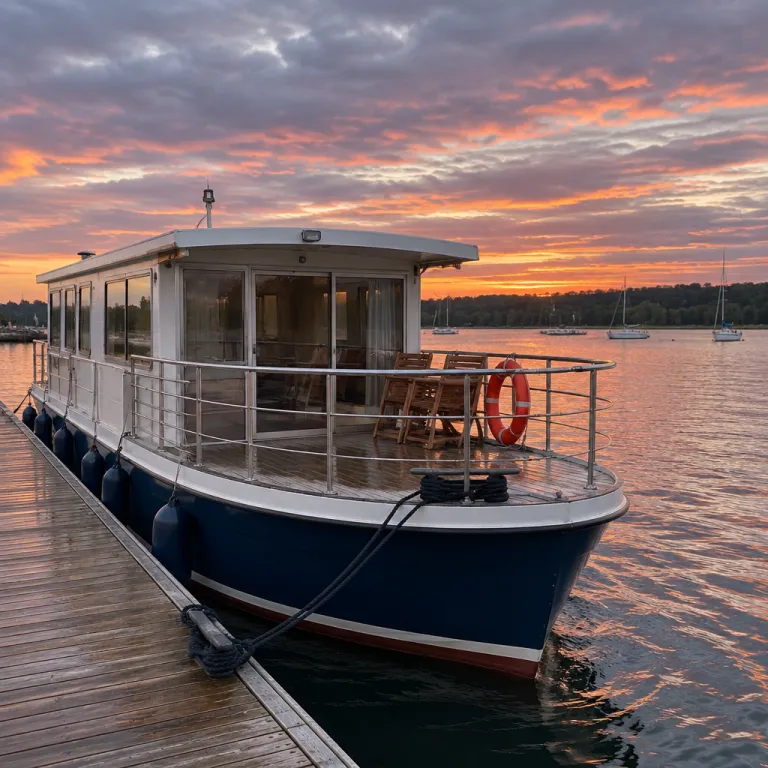
Most people hear “houseboat” and picture dramatic houseboat seasick motion on open sea. A luxury houseboat stay is usually very different, because the boat is moored in calm waters where movement is minimal and predictable. Your body often interprets this gentle motion as part of normal life on the water rather than a trigger for motion sickness.
The key distinction is simple ; a moored houseboat on a sheltered canal, marina, or lake behaves more like a floating apartment than a seasickness boat crossing rough sea. When the hull is tied securely on both side of the pontoon and protected from passing boats, the motion that reaches your inner ear is usually soft and slow, which helps reduce the risk of feeling seasick or developing nausea symptoms. Luxury operators know that many guests worry about sickness, so they deliberately choose berths with natural breakwaters, low wake, and a stable houseboat profile.
By contrast, a cruise boat underway at sea exposes your body to constant movement, with the deck and your inner ears sensing the body moving in several directions at once. That mismatch between what your eyes see and what your inner ear feels is what creates classic motion sickness, especially for people who are new to life on the water. On a well moored houseboat, the water still moves, but the center boat area where you sleep and stay is usually shielded from the sharpest motion, which is why many guests with a history of seasickness report no symptoms at all.
What actually causes seasickness on a houseboat stay
Seasickness is not about weak stomachs ; it is about confused inner ears. When you are on a boat, your inner ear detects motion while your eyes may see a fixed cabin interior, and that sensory conflict can make people feel unwell. The result is the familiar cluster of symptoms ; nausea, cold sweats, and a vague sickness that can escalate if you keep focusing on the wrong visual cues.
On a houseboat, the risk of motion sickness depends on how much the hull moves in the water and how quickly that movement changes. Small boats react more sharply to passing wake and wind, so a compact seasick boat moored on an exposed river bend will usually generate more motion than a long, wide stable houseboat in a protected marina. Guests who are prone to feeling seasick tend to notice quick side to side rocking more than slow, gentle up and down motion, because the inner ears struggle to reconcile that lateral sway.
Luxury hosts who understand smart boating design try to place guest cabins near the center boat area, where the body moving effect is least pronounced. They also encourage guests to step outside for fresh air and to look at the horizon, which helps the inner ear and the eyes agree on the same motion story. Before setting sail for a more exposed mooring, experienced captains will often suggest acupressure wristbands or a Sea Band, and they remind guests to avoid heavy meals and strong alcohol if they are already feeling seasick or anxious about symptoms.
Houseboat etiquette and what hosts wish guests knew often includes a discreet note about motion, seasickness, and how to move around the boat safely. Reading that guidance before your stay can help reduce anxiety, which in turn can help reduce the chance that your body will interpret every small shift as a sign of sickness. For many people, understanding how motion works on boats is the first step toward a relaxed stay on the water.
Where you moor matters ; calm waters, canals, and sheltered marinas
Location is the single biggest factor in whether you will notice houseboat seasick motion during your stay. A houseboat moored in calm waters inside a marina breakwater will usually move far less than one tied along an open estuary or tidal river. When you browse luxury listings, pay close attention to whether the boat sits on a lake, a canal, a river, or directly on the sea.
In cities like Amsterdam, Copenhagen, or Seattle, many houseboats are permanently connected to the quay and behave almost like floating homes, which dramatically reduces the risk of motion sickness for sensitive people. The water still shifts under the hull, but the movement is slow and damped, so your inner ear and inner ears adapt quickly and the body moving sensation fades into the background. Families who worry about seasickness often report that these urban houseboats feel steadier than some small boats they have taken on day trips.
By contrast, a luxury houseboat moored near the mouth of a bay or along a busy channel will feel every passing boat, especially fast motor boats that throw a steep wake. If you are prone to feeling seasick, ask the host how much wake the boat receives, whether the mooring is on the protected side of the harbor, and how strong the local tide is. For long weekends such as a Labor Day weekend on the water, choosing a berth in a quiet inner basin with calm waters can help reduce motion and keep nausea symptoms at bay for the whole family.
How boat design, size, and cabin choice influence motion
Not all houseboats feel the same underfoot ; hull shape and layout change everything. Wider, heavier houseboats with low centers of gravity tend to be more stable, so they transmit less sharp motion to your body. Narrow, high sided small boats can exaggerate side to side rolling, which some people interpret as feeling seasick even when the water looks calm.
When you choose a cabin, think like a sailor and aim for the center boat area, both lengthwise and vertically. Cabins at the bow or stern experience more pronounced movement, because they sit farther from the pivot point of the hull and swing more when the boat reacts to waves or passing boats. A lower deck cabin near the middle of a stable houseboat usually offers the best combination of gentle motion and quiet, which can help reduce the risk of motion sickness for adults and children.
Luxury operators who cater to families often design their layouts so that primary bedrooms sit near the center, while lounges and terraces occupy the ends where movement is more noticeable but also more playful. If you are worried about houseboat seasick motion, ask the host whether any cabins are located close to the waterline and away from the most exposed side of the boat. For guests who remain anxious, some marinas now offer hybrid options ; floating platforms that look like boats but barely move, which can be a reassuring first step into life on the water.
For a deeper sense of how different cities manage floating districts and moorings, explore this guide to houseboat districts worth knowing. Understanding how each harbor is laid out will help you predict where motion will be gentlest and where a seasickness boat experience is more likely. That level of planning is part of smart boating for families who want the romance of the sea without the sickness.
Practical ways to reduce seasickness risk before and during your stay
There is a lot you can do to reduce the chance that houseboat seasick motion will spoil your trip. Before booking, read the listing carefully and ask direct questions about motion, wake, and how exposed the mooring is to open sea or strong river currents. Clarify whether the boat is always moored or sometimes setting sail, because a houseboat that occasionally cruises will expose you to more movement than one that remains tied in calm waters.
Once on board, treat your body kindly ; avoid heavy meals, limit alcohol, and stay hydrated, especially during the first hours while your inner ear is adapting. If you start feeling seasick, step outside, breathe fresh air, and focus on a fixed point on the horizon rather than the cabin interior. Many guests find that acupressure wristbands or a Sea Band, used according to the manufacturer’s instructions, help reduce nausea symptoms by stimulating specific points on the wrist, although responses vary between people.
For families, smart boating habits make a real difference ; encourage children to spend time on deck rather than lying down scrolling on a phone in a moving cabin. Keep the windows open when possible so the body moving sensation matches what the eyes see, which can ease motion sickness for both adults and kids. For medication or stronger remedies, consult a pharmacist or doctor in advance, explain that you will be on a moored houseboat rather than a cruising boat, and ask what they recommend for your health profile and any existing sickness concerns.
Questions to ask your host ; motion, policies, and when to choose a floating suite
Luxury and premium booking platforms now expect hosts to be transparent about houseboat seasick motion, so use that to your advantage. Ask whether the boat is permanently connected to shore services or free floating, how often passing boats create wake, and which side of the harbor wall the mooring occupies. Clarify whether the houseboat is on a river with strong currents, a tidal basin, or a lake, because each water setting produces different patterns of movement.
It is also worth asking where the main sleeping areas sit relative to the center boat area and the waterline. Cabins low and central usually feel calmer, while rooftop suites and bow cabins can amplify motion, which some people love and others associate with sickness or nausea. If you already know that you are prone to motion sickness, tell the host in advance ; experienced owners often have practical tips, from suggesting the best cabin to recommending where to sit on deck when you are feeling seasick.
For some guests, the best answer is not a traditional houseboat at all but a floating hotel suite built on a broad pontoon, which offers life on the water with almost no perceptible movement. When you read a listing, check the privacy policy and house rules for any mention of setting sail, as that can signal that the boat occasionally leaves its berth and behaves more like a cruising vessel. If you prefer zero motion, filter for properties described as fixed floating platforms or permanently moored boats, and confirm in writing that the vessel will remain in calm waters for the duration of your stay.
Who tends to feel seasick, and how the body usually adapts
Not everyone experiences houseboat seasick motion in the same way ; sensitivity varies widely. Children between about two and twelve, people with a history of migraines, and guests who already feel anxious about sickness are more likely to notice motion sickness symptoms early. At the same time, many frequent travelers who struggle on small boats at sea report no issues at all on a stable houseboat in sheltered water.
What often surprises people is how quickly the body adapts to gentle, predictable movement. During the first hours, your inner ear and eyes may send mixed signals, and you might feel slightly off balance or mildly seasick, especially when you move from deck to cabin. After a night’s sleep, most guests find that their inner ears have recalibrated to life on the water, and the body moving sensation becomes background noise rather than a trigger for nausea.
If you know you are highly sensitive, plan your arrival so you can settle in during daylight, eat lightly, and spend time on deck with plenty of fresh air. Use acupressure wristbands or a Sea Band if they have helped you before, and position yourself near the center boat area where motion is least intense. For persistent or severe symptoms, especially if they include more than mild nausea, consult a medical professional rather than relying solely on travel anecdotes, and remember that you can always choose a less exposed mooring or a broader, more stable houseboat for your next stay.
Key figures about motion sickness and boat stays
- Studies from the United States Navy and other maritime organizations suggest that around 20 to 30 percent of people are highly susceptible to motion sickness, while roughly 50 percent may experience some symptoms in rough conditions, which explains why calm waters and sheltered moorings are so important for houseboat guests.
- Research published in the journal Aerospace Medicine and Human Performance has shown that most people adapt to a new motion environment within 24 to 72 hours, which aligns with guest reports that the first day on a boat is usually the hardest for seasickness.
- Clinical trials on acupressure wristbands and Sea Band style devices show mixed but promising results, with some studies reporting a significant reduction in nausea scores compared with placebo, which is why many pharmacists still recommend them as a low risk option for travelers.
- Data from major cruise and ferry operators indicate that reported seasickness cases drop sharply when vessels operate in sea states below 1 meter of wave height, reinforcing the value of choosing houseboats moored in naturally protected basins and canals.
FAQ ; houseboat motion and seasickness
Will I feel constant motion on a moored houseboat ?
On a well moored houseboat in calm waters, most guests feel only gentle, occasional movement. The hull may shift slightly when a boat passes or the wind changes, but it is rarely the continuous rolling associated with open sea travel. Sensitive people usually adapt within the first day, especially if they spend time on deck with fresh air.
Is a houseboat stay suitable for someone with severe motion sickness ?
Many travelers with a history of motion sickness stay comfortably on stable houseboats in sheltered marinas or canals. The key is to choose a wide, heavy vessel in a protected location and request a cabin near the center boat area, close to the waterline. For severe or medically complex cases, discuss your plans with a doctor before booking and consider a fixed floating suite if you remain unsure.
Do larger houseboats move less than small boats ?
In general, larger and wider houseboats move less sharply than small boats of similar design. Their greater mass and broader hulls dampen quick side to side motion, which many people find more comfortable. However, location still matters ; a big boat in an exposed tidal channel can feel livelier than a smaller vessel in a sheltered basin.
What can I do if I start feeling seasick during my stay ?
If you begin feeling seasick, go outside, focus on the horizon, and breathe slowly until the nausea eases. Avoid heavy food and alcohol, sip water, and consider using acupressure wristbands or a Sea Band if you have them. If symptoms persist or worsen, rest in a central, low cabin and seek medical advice if you are concerned.
How can I tell from a listing whether a houseboat will move a lot ?
Look for clues such as “sheltered marina”, “inner basin”, “canal mooring”, or “permanently moored” in the description. Check photos for breakwaters, quays, and nearby land that suggest protection from open sea swell and strong river currents. When in doubt, message the host with specific questions about wake, wind exposure, and whether the boat ever leaves its berth.
References
- United States Navy ; motion sickness training materials and adaptation data.
- Aerospace Medicine and Human Performance ; peer reviewed studies on motion adaptation and seasickness.
- Centers for Disease Control and Prevention (CDC) ; traveler health guidance on motion sickness and preventive measures.