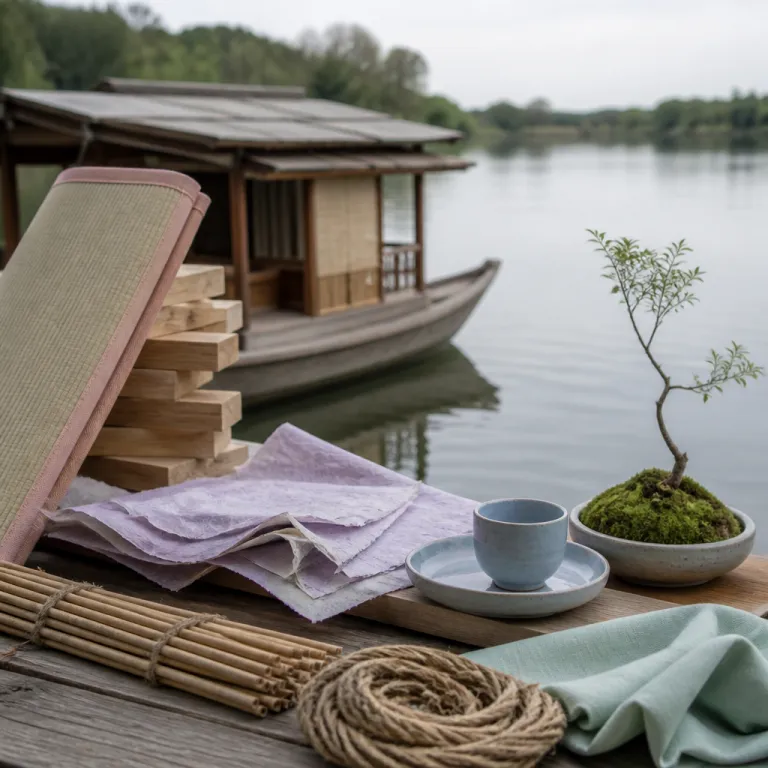
From yakatabune to river ryokan: the quiet roots of Japanese houseboat minimalism
Slip onto a traditional yakatabune in Japan and you feel time slow. These low wooden boats glide along bays and rivers, offering floating experiences that helped shape many modern Japanese houseboat and floating ryokan interiors. The cabins remain compact yet calm, a perfect prelude to understanding how classic ryokan traditions migrated aboard.
Historically, yakatabune hosted dinner cruises on waterways such as the Sumida River in Edo-period Tokyo, often seating a few dozen guests for kaiseki-style feasts and seasonal viewing parties. According to the Tokyo Metropolitan Government’s tourism office, many contemporary yakatabune still carry around 20 to 40 diners per cruise, keeping the atmosphere intimate. That blend of dining, travel and water-based hospitality still informs how a floating hotel or boat-based ryokan is planned today, especially when designers work on the Seto Inland Sea and nearby channels. Guests sit close to the waterline, framed views of coastal Japan or quiet inland landscapes turning each course into moving art.
Along quieter rivers, the traditional ryokan and the more contemporary Japanese inn on stilts or pontoons refined overnight stays. These river ryokan used tatami rooms, sliding shoji and low furniture to keep natural light soft while preserving privacy from passing boats. When architects translate that language into contemporary Japanese houseboat minimalism, they gain a toolkit for luxury travel that feels both deeply traditional and quietly modern.
Designers and houseboat owners in Japan have long worked with limited footprints, often around 40 to 60 square metres per unit depending on hull size, a range echoed in many small urban apartments. Japanese houseboat architects respond with efficient layouts, built-in storage and modular sleeping zones that echo the best river ryokan suites. For travellers choosing a floating hotel today, that heritage means cabins that feel serene rather than cramped, even when the inland sea outside is only a hand’s breadth from the deck.
Ma, wabi sabi and the art of compact space aboard
Step into a well-considered Japanese houseboat suite and you notice what is not there. Empty floor, clean walls and low furniture create ma, the purposeful negative space that traditional Japanese architects prize. On water, that restraint turns a small floating cabin into a calm ryokan-style retreat.
Wabi sabi, the appreciation of imperfect beauty, also plays quietly aboard many Japanese boats. A knot in cedar, a hairline crack in a ceramic cup or the patina on brass fittings connects guests to sea air, time and tide in the Seto Inland Sea. Rather than hiding wear, a floating ryokan can celebrate it, echoing the way a traditional inn on land honours age in timber beams and tatami edges.
These principles matter for Western travellers considering luxury stays on the Seto Inland Sea or other inland waterways worldwide. Compact cabins, when shaped by ma and wabi sabi, feel generous because every centimetre has a role and every view to the sea or islands is framed with intent. One Hiroshima-based designer recalled watching a couple step into a 20-square-metre suite and say, “It feels like the room is breathing with the water,” a reaction that captures how carefully edited space can feel unexpectedly expansive.
Light is the final, crucial ingredient. Japanese houseboat designers use shoji screens, clerestory windows and carefully placed openings to filter natural light so it glows rather than glares on the water. For readers planning their own floating hotel experiences, this is where studying how light and motion shape floating interiors becomes as important as choosing the right itinerary across Setouchi or another inland sea.
Materials, craftsmanship and the feel of a floating ryokan
Japanese houseboat minimalism begins with touch as much as sight. Bare feet on tatami, fingers on warm cedar railings and the faint rustle of paper shoji create a sensory language that no standard hotel corridor can match. On water, these traditional Japanese materials must work harder, facing humidity, salt and constant motion.
Architects and craftsmen in Japan respond with marine-treated woods, layered construction and joinery that flexes subtly with the swell. Natural fibre mats, linen futon covers and cotton noren curtains breathe, helping cabins stay comfortable as sea breezes shift around the hull. When you stay aboard a floating hotel that respects these choices, the result feels both luxurious and quietly sustainable.
Design tools such as tatami modules, sliding partitions and built-in cabinetry allow Japanese ryokan-style rooms to transform through the day. A living area becomes a sleeping space at night, while low tables tuck away to open floor for stretching or simply watching the inland sea drift past. This is Japanese houseboat craft at its most practical, turning every square metre into a flexible stage for different experiences.
For Western boat hoteliers, there is a clear lesson. Invest in craftsmanship that can handle coastal Japanese conditions and choose finishes that age gracefully rather than chasing glossy surfaces that tire quickly. When you add thoughtful pieces such as sculpted loungers or daybeds, consider options that echo the water’s movement, much like the elevated seating profiled in guides to wave loungers that enhance boat hotel luxury.
Dining on water: from kaiseki cruises to modern guntu suites
Japanese houseboat minimalism reaches its most social expression at the dining table. Traditional yakatabune on rivers near Onomichi or Tokyo host kaiseki dinners where each course arrives in rhythm with the current. Guests sit close to the water, the inland sea or river reflecting lantern light like moving art.
On the Seto Inland Sea, the small cruise ship Guntu has reinterpreted this tradition for contemporary luxury travel. This award-winning floating ryokan operates as a compact cruise-style hotel, with suites that feel like pared-back Japanese ryokan rooms translated aboard a ship. Floor-to-ceiling windows pull natural light deep into the cabins, while low seating and pale woods keep the focus on Setouchi horizons.
Dining aboard Guntu and similar floating hotels leans into locality. Seasonal seafood from nearby waters, vegetables from surrounding islands and ceramics by regional artisans turn each meal into a quiet geography lesson. For couples, this is where the romance of travel meets the intimacy of a traditional ryokan meal, only now the view might include Itsukushima Shrine or distant fishing boats.
When you compare such experiences with many Western river cruises, the difference often lies in restraint and pacing. Japanese-inspired houseboat design favours fewer dishes, more space between courses and a closer relationship with the surrounding sea or inland landscape. If you are choosing between a yacht charter and a more contemplative floating hotel stay, it helps to understand the difference between yachts and boat-based hotels before you book.
What Western floating hotels can learn from ship guntu and beyond
For many readers, the name Guntu has become shorthand for refined Japanese houseboat minimalism. Conceived by architect Yasushi Horibe, the ship sails quietly through Setouchi, its profile closer to a low-lying ryokan than a conventional cruise ship. Inside, corridors, lounges and suites echo traditional Japanese spatial logic while embracing the realities of sea travel.
Guntu’s distinctive features include long verandas that blur cabin and deck, and public areas that feel like living rooms rather than lobbies. Every suite uses natural light, pale timber and carefully framed views of islands and inland shorelines to keep guests oriented to the Seto Inland Sea. This is not spectacle; it is a lesson in how to make a floating hotel feel like a slow-moving home.
Western designers working on floating hotels from Scandinavia to the United States can borrow several principles. First, treat the waterline as the primary asset, arranging ryokan-style seating, bathing and sleeping zones to face the sea or river rather than interior corridors. Second, use Japanese houseboat thinking as a guide for storage, with built-in cabinetry and modular furniture that keep surfaces clear.
Finally, remember that “a floating home designed with minimalist principles” and “efficient layouts and built-in storage” are not just answers to what a Japanese houseboat is and how it works. They are a checklist for any company planning new floating experiences, whether on coastal Japan routes or quiet canals far from Asia. Visit houseboat communities, speak with Japanese designers and you will see how contemporary innovation still rests on traditional ryokan thinking.
FAQ
What is a Japanese houseboat and how does it differ from a river ryokan ?
A Japanese houseboat is a floating home or hospitality space designed with minimalist principles, often using tatami, shoji and compact layouts. A river ryokan usually sits on stilts or directly on the bank, but it shares the same traditional Japanese room structure and service style. The main difference is movement; houseboats travel, while river ryokan remain fixed yet still embrace the water’s edge.
How do Japanese houseboats maximise limited space for guests ?
Japanese houseboats maximise space through efficient layouts, built-in storage and modular furniture that can transform a room’s function across the day. Designers rely on tatami modules, sliding partitions and low tables that tuck away to keep floors clear. This approach allows cabins of around 40 to 60 square metres to feel generous, especially when natural light and water views are carefully framed.
Where can travellers experience yakatabune and floating ryokan style stays in Japan ?
Travellers can experience yakatabune dinner cruises on rivers such as the Sumida in Tokyo and around Onomichi, where boats host kaiseki-style meals on the water. For overnight floating ryokan-inspired stays, the Seto Inland Sea and the wider Setouchi region offer options ranging from small houseboats to the ship Guntu. Many traditional ryokan along rivers also provide a similar atmosphere, even when the buildings themselves do not move.
Why are Japanese houseboat designs relevant for Western floating hotels ?
Japanese houseboat minimalism addresses the same challenges Western floating hotels face: compact footprints, changing light and constant motion. Principles such as ma, wabi sabi and integrated storage help cabins feel calm rather than cramped, which is crucial for luxury travel on water. Western designers can adapt these ideas to different climates and regulations while keeping the focus on the relationship between guest, interior and surrounding sea or river.
Are Japanese houseboats becoming more popular as interest in minimalism grows ?
Interest in Japanese houseboats has grown alongside global enthusiasm for minimalist living and smaller, more intentional travel spaces. In urban areas with limited land, floating homes and compact ryokan-style cabins offer efficient yet elegant alternatives to conventional apartments or hotels. This trend encourages more architects, designers and craftsmen to combine traditional techniques with smart technology, keeping the typology relevant for future travellers.