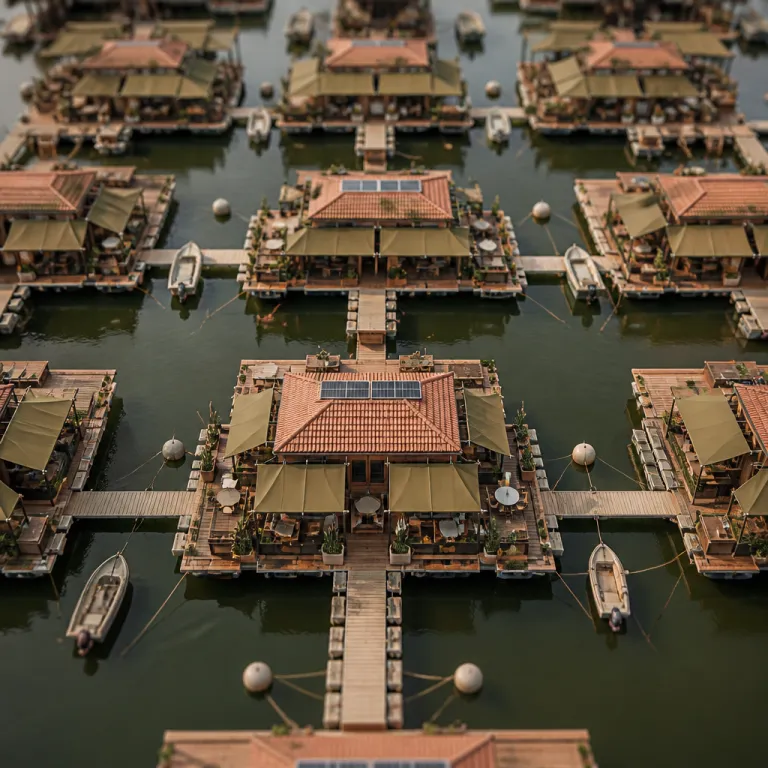
The tow-to-site revolution in modular floating hotel prefab design
A new generation of modular floating hotel prefab concepts is quietly redrawing the map of where high end hospitality can appear. Instead of a conventional building site, the entire hotel is assembled in a shipyard as a precise prefabricated house on water, then towed into position when every cabin and corridor is ready. For guests, that means a polished arrival on day one rather than years of cranes, noise and dust along the waterfront.
The Flotilla by Good Hotels, built by Holland Shipyards Group, is the clearest expression of this tow-to-site logic in a modular floating hotel prefab format. The base barge measures 108.25 meters by 18.00 meters, with a 99.00 meter by 15.00 meter topside, so the footprint is closer to a compact urban building than a cruise ship yet still carries 243 rooms. You feel the scale in the long waterline and the generous square meters of deck, but the experience remains intimate, more like a waterside house than a resort complex.
Because the Flotilla is built entirely in the shipyard, every structural item is engineered under controlled conditions, from the steel structure of the hull to the light steel framing of the guest room modules. This prefabricated approach allows the team to treat each room as a refined prefab house cabin, with customized layouts and carefully framed views over the harbour. Once complete, the whole modular house prefab product is towed to its mooring, so the city receives a finished floating hotel instead of a long running construction story.
Inside a shipyard built hotel: architecture, cabins and compact luxury
Step on board a modular floating hotel prefab like the Flotilla and the first surprise is how residential it feels. Corridors are scaled more like those in elegant prefab homes than in a cruise liner, and the cabins borrow cues from a modern tiny house with clever storage and layered lighting. You sense the discipline of a prefabricated house project, where every square meter has been argued over at the drawing board.
Each guest room sits within a modular house style frame, essentially a refined container house without the industrial roughness of a shipping container. The steel structure is wrapped in warm finishes, and the light steel internal walls allow for customized combinations of twin, double or compact office pod style layouts for business leisure guests. Large windows turn the room into a viewing capsule, with long horizontal views that make even homes tiny in the distance feel part of your private panorama.
Because the building is assembled as a series of prefab houses modules in the shipyard, tolerances are tight and acoustic performance is high, which matters when you are sleeping just a few meters above the waterline. Bathrooms are often designed as a kind of space capsule within the room, a self contained item that drops into place like a flat pack product during construction. For travelers used to land based hotels, the way this modular floating hotel prefab compresses comfort, storage and office space into a compact cabin can be a revelation, and it echoes the lessons from compact boat architecture explored in depth in this guide to what boat architecture teaches land based hotels.
Why tow-to-site matters for cities, coasts and sensitive waterfronts
For city planners and harbour authorities, the modular floating hotel prefab model solves a long standing dilemma. Waterfronts crave high quality accommodation, yet a conventional building can lock up prime land and views for decades while construction plays out. A shipyard built prefabricated house on a barge arrives fully formed, so the disruption window shrinks from years to days.
The Flotilla shows how a hotel can be treated almost like a movable prefab house prefab, with the entire structure towed into place when the destination is ready. If the city’s priorities change, the modular house can in principle be relocated to another port, turning a fixed asset into a mobile one. That flexibility also makes the concept attractive for temporary event capacity, seasonal peaks or even emergency housing, where a cluster of prefab homes or tiny prefab cabins could be moored as a floating neighbourhood.
Because the base is a carefully engineered steel barge, the building behaves predictably in the water, and the light steel superstructure keeps weight under control while preserving generous interior square meters. The same pack container logic that allows an office pod or detachable container to be shipped worldwide now applies to hospitality, only at the scale of a 243 room hotel. For guests, this means you might one day sleep in a luxury prefab floating hotel beside a marina golf range or even step straight from your cabin to one of the floating golf greens that elevate a luxury boat hotel stay, without ever seeing a construction crane on the skyline.
Fossil fuel free floating hotels and the sustainability equation
The Flotilla is designed to operate entirely without fossil fuels, relying on green electricity and a solar panel roof that functions as an energy plant. That single design decision shifts the sustainability profile of this modular floating hotel prefab far beyond most conventional waterfront buildings. Instead of diesel generators humming below deck, the hotel behaves more like a modern mobile power conscious prefab house that happens to float.
Because the structure is prefabricated in a shipyard, the construction phase can be tightly controlled, with less waste than a typical concrete building and a cleaner working environment along the quay. The steel structure and light steel framing are optimized for strength and weight, and every prefabricated house module is tested before it leaves the yard, which reduces the need for remedial work on site. Over its life, the ability to tow the modular house prefab to a new location also extends its usefulness, rather than locking embodied carbon into a single plot of land.
For guests, sustainability is not just a line in a brochure but something you feel in the way the building interacts with its environment, from the quiet electric systems to the way the space capsule like cabins stay thermally efficient despite their large windows. Many modular floating hotel prefab operators now add subtle digital tools, such as in room energy dashboards or a short welcome video that explains how the product works and how guests can help reduce consumption. When you book a stay through a specialist platform, you are not just choosing a room with views but endorsing a new kind of house prefab thinking that treats every square meter of water as a potential low impact hospitality site.
What the Flotilla model means for future travelers and booking choices
For business leisure travelers extending a work trip, the modular floating hotel prefab model opens up a new category of stay that sits somewhere between a city hotel and a private cabin on the water. You might check in after meetings, open your laptop at a neatly designed office desk that borrows from the office pod world, then step out to a deck that feels like the terrace of a tiny house perched above the harbour. The rhythm of the water becomes part of your routine, yet the service standards match any premium urban property.
As more prefabricated house based floating hotels appear, expect greater choice in layout and style, from minimalist modular house designs to more expressive space capsule inspired suites. Some projects will lean into the container house aesthetic, celebrating the industrial steel and flat pack logic, while others will hide the modular bones behind soft residential finishes that echo high end prefab homes. Either way, the underlying house prefab and prefab house engineering allows operators to customize room mixes, add or remove modules and even trial new product types, such as wellness capsules or detachable container offices, without rebuilding from scratch.
Guests will also see more playful amenities that take advantage of the water, from floating golf targets to private slides that turn the side of the building into a discreet aqua park, as explored in this feature on how a yacht slide transforms a floating hotel stay. Underneath the fun sits a serious shift in how we think about homes tiny, prefab houses and modular floating hotel prefab projects as part of the urban fabric. A hotel built in a shipyard and towed into place is no longer a novelty item but a fully fledged product category, one that lets hospitality exist wherever there is enough water depth and a few hundred square meters of calm surface to moor a carefully engineered steel structure.
FAQ
How stable does a modular floating hotel prefab feel compared with a land hotel ?
A well engineered modular floating hotel prefab like the Flotilla sits on a broad steel barge, so movement is minimal in sheltered waters. You may feel a gentle sway in strong winds or when a large vessel passes, but the light steel superstructure and low center of gravity keep the building stable. For most guests, the sensation is closer to being in a waterfront house than on a ship.
Can a shipyard built floating hotel be relocated to another city ?
Yes, one of the core advantages of the modular floating hotel prefab model is towability. The entire prefabricated house structure is designed as a single vessel or as linked modules that can be moved by tug to a new harbour. This allows operators and cities to add or remove capacity without committing to a permanent building on land.
Are the rooms in a modular floating hotel as comfortable as in a traditional property ?
Guest rooms in a modular floating hotel prefab are typically designed with the same comfort standards as high quality prefab homes, with good insulation, acoustic separation and modern bathrooms. The compact cabin layout borrows from tiny house design, so storage and furniture are carefully integrated. Large windows and water level views often make the rooms feel more spacious than their square meters suggest.
How sustainable is a fossil fuel free floating hotel in practice ?
A floating hotel that operates without fossil fuels and uses a solar panel roof for power can significantly reduce operational emissions compared with a conventional diesel powered vessel. When the modular floating hotel prefab is built in a shipyard using prefabricated house techniques, construction waste and local disruption are also reduced. Over time, the ability to relocate the structure extends its useful life, improving the overall environmental return on the steel and other materials used.
What should I check before booking a stay on a modular floating hotel prefab ?
Before booking, review how the hotel handles access, especially if it is reached via a gangway or small shuttle boat. Look for clear information on room size in square meters, views, and whether cabins are closer to a tiny house layout or a more conventional hotel room. It is also worth checking how the property manages noise, stability and sustainability, so you know exactly what kind of prefabricated house on water experience you are choosing.